
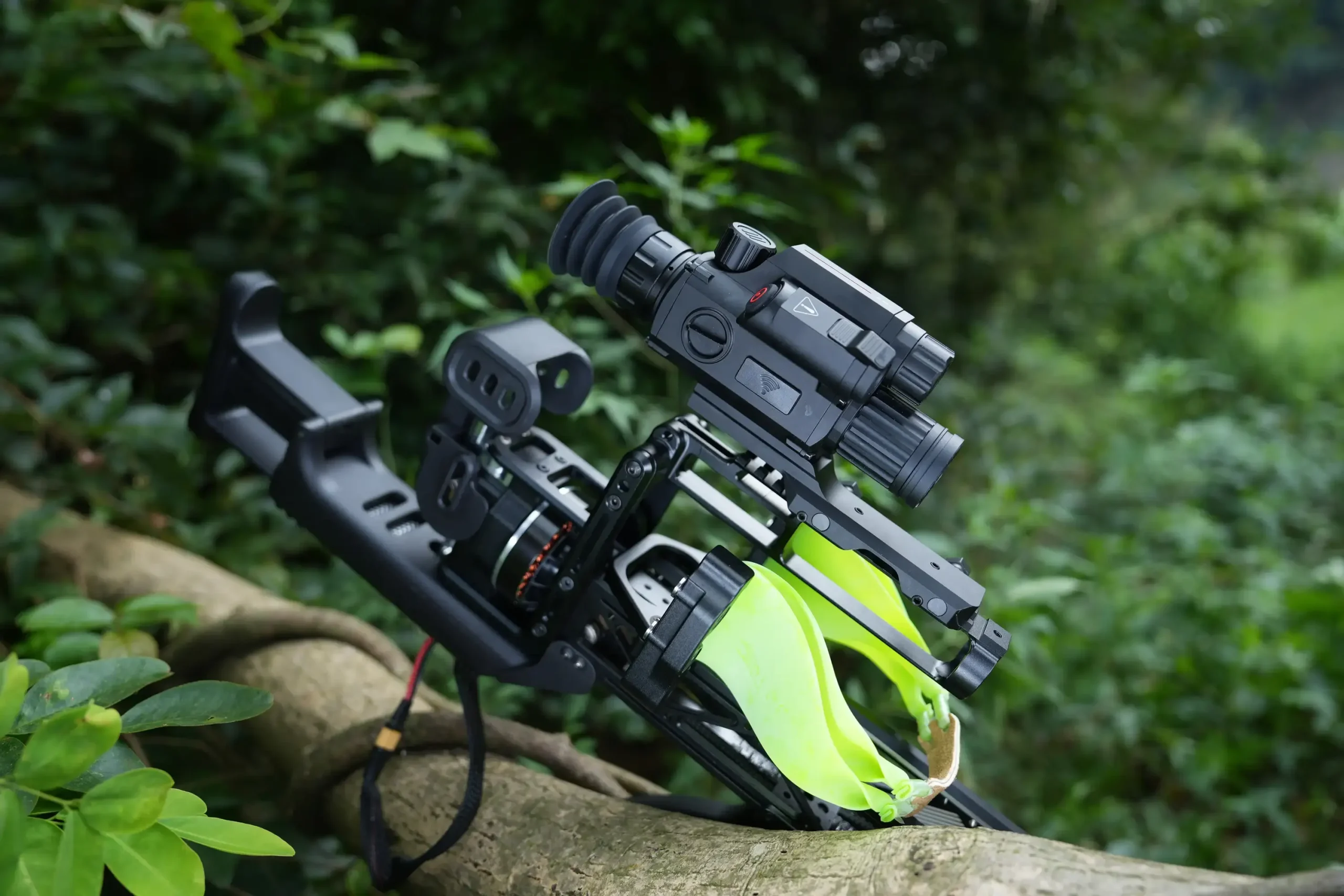
The YUBEEN DH9 is a digital day & night vision riflescope designed around one central idea: imaging, ranging, recording, controls, and field-use functions should work as one system rather than as disconnected specifications.
Its current verified configuration combines a 2560 × 1440 CMOS sensor, 60 mm F2.0 objective lens, Light Pro low-light imaging, and a 0.49-inch 1920 × 1080 AMOLED display. The platform also integrates laser ranging, Picture-in-Picture, recording, Freeze Zeroing, a ballistic calculator, and a Quick-Shift mode selector.
The result is not defined by one headline number. The DH9 is better understood by looking at how its imaging chain and supporting functions work together.
For the complete current product presentation, see the YUBEEN DH9 product page.
A Digital Day & Night Imaging Platform
Digital day & night vision differs fundamentally from thermal imaging.
The DH9 uses a CMOS image sensor. During daylight and other illuminated conditions, the imaging system works with reflected scene light. As light levels fall, the amount of usable information reaching the sensor decreases, and lens performance, sensor behavior, image processing, focus, and scene contrast become increasingly important.
The DH9 uses a 2560 × 1440 CMOS sensor operating at a stated 50 fps.
These two specifications describe different things:
- 2560 × 1440 describes the native capture matrix;
- 50 fps describes how frequently the image is updated.
A higher frame rate does not create additional spatial resolution, and a higher sensor resolution does not guarantee identical detail under every lighting condition.
Why Sensor and Display Resolution Should Be Kept Separate
At the viewing end, the DH9 uses a 0.49-inch AMOLED display with 1920 × 1080 resolution.
That number should not be confused with the sensor resolution.
The sensor captures scene information.
The display presents the processed image to the eye.
Keeping these two stages separate prevents a common specification mistake:
display resolution does not change the native sensor resolution.
60 mm F2.0 Optics and Light Pro Low-Light Imaging
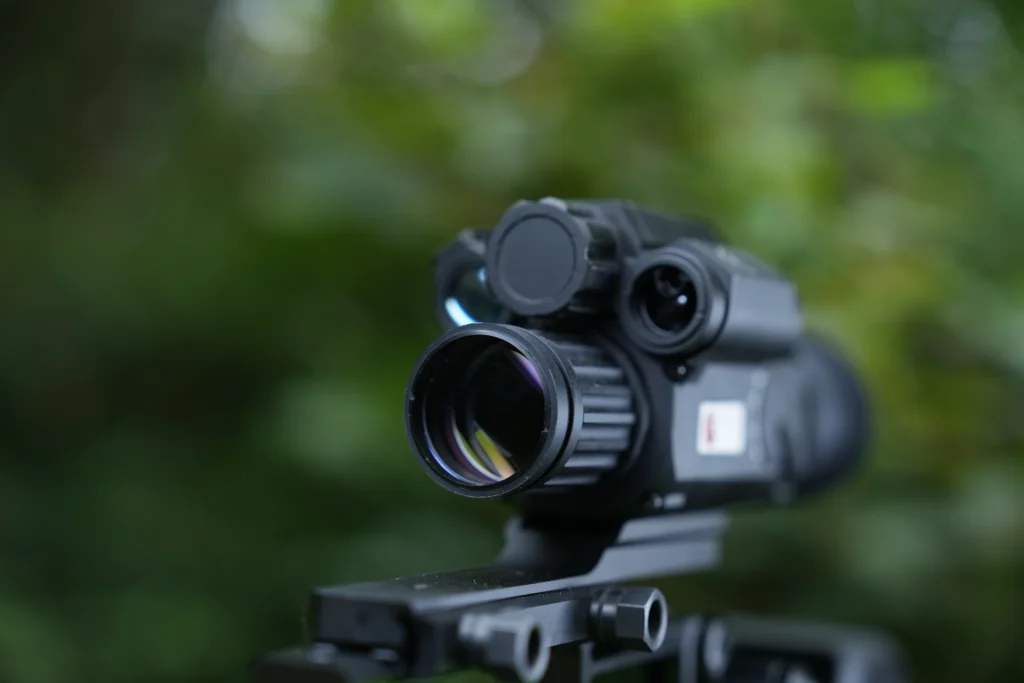
The DH9 uses a 60 mm F2.0 objective lens.
The lens forms the optical input for the CMOS sensor, while YUBEEN’s Light Pro Low-Light Imaging processing works on the captured information as lighting conditions change.
An F2.0 lens specification should not be treated as a guarantee of a particular viewing or identification distance.
Practical image quality still depends on:
- available scene light;
- focus;
- target size;
- target reflectivity;
- atmospheric conditions;
- motion;
- processing settings.
The DH9 also specifies a 3 m minimum focus distance.
That figure describes close focusing capability. It is not a recommended observation distance or a safety threshold.
Magnification and Digital Zoom Are Different Specifications
The DH9 has a stated overall magnification range of:
4.8×–37.8×
Separately, the product specifies:
up to 2.3× lossless digital zoom
These values should not be merged into one simplified claim.
The lossless designation applies only to the stated 2.3× range.
Digital magnification beyond the native-information limits of the imaging chain does not create new sensor detail. Enlarging an image and capturing more original scene information are different processes.
This distinction becomes especially important in low-light conditions, where the source image itself may already contain less usable information.
Controls Designed Around Direct Operation
Digital optics often combine many functions inside one housing.
That makes the control layout important.
The DH9 includes a Quick-Shift Mode Selector Lever, giving the user a dedicated physical control for mode selection rather than placing every change behind a menu.
The significance is not that a mechanical lever is universally superior to buttons.
It is that controls with distinct physical actions can make common adjustments easier to distinguish by feel.
This is especially relevant when viewing through the eyepiece or operating in reduced light.
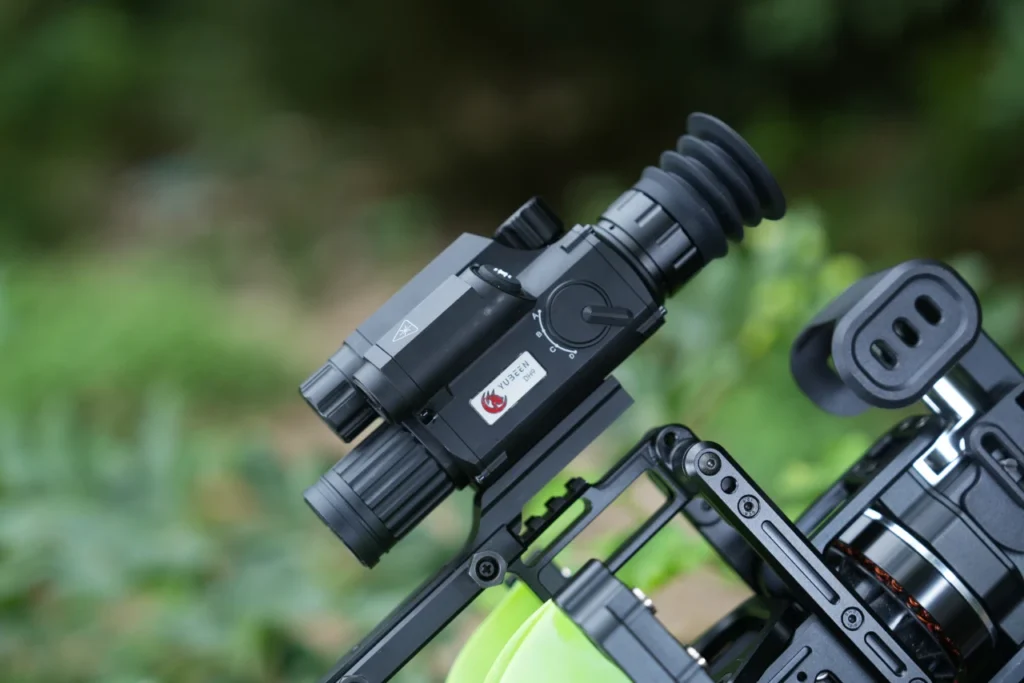
The article should show the real DH9 control layout here rather than an AI-generated interpretation of the housing.
Integrated Laser Ranging Is a Separate Measurement Function
The DH9 includes an integrated laser rangefinder specified for:
- 3–1000 m measurement range
- ±1 m stated ranging accuracy
- 905 nm
- Class 1 laser
These values describe the rangefinder.
They do not describe:
- night-vision viewing distance;
- recognition distance;
- identification distance;
- illumination distance.
A scope can measure the distance to an object without the imaging channel necessarily providing enough information to identify that object at the same range.
That distinction is essential whenever an LRF specification appears next to an imaging specification.
Picture-in-Picture, Freeze Zeroing, and Ballistic Calculation
The DH9 also includes:
- Picture-in-Picture;
- Freeze Zeroing;
- Ballistic Calculator.
These functions support the viewing and setup workflow, but they should not be described as automatic aiming.
A ballistic calculator is an assistance function based on configured information and measured conditions. Its output still depends on the data entered, zeroing, setup, and appropriate use.
Likewise, Picture-in-Picture changes image presentation.
It does not increase the detector’s native resolution.
This article intentionally does not attribute unverified automatic PIP centering, pitch/roll correction, or zoom-center behavior to the DH9.
Recording and Connectivity
The DH9 supports:
- photo recording;
- video recording;
- audio recording;
- recoil-activated recording;
- Wi-Fi hotspot;
- 64 GB eMMC internal storage.
These features serve different purposes from the imaging hardware.
Recording saves the displayed result.
Wi-Fi supports connectivity.
Internal storage determines available onboard file capacity.
None of these functions should be treated as proof of better low-light image quality.
They can also affect total power consumption when used.
Battery Architecture and Runtime
The current DH9 specification uses:
1 × 21700 rechargeable battery
with operating time stated as:
up to 8 hours under specified conditions.
That figure should always retain its qualification.
Actual runtime can vary with:
- temperature;
- display settings;
- Wi-Fi use;
- laser ranging;
- recording use;
- other operating conditions.
The DH9 product page and brochure should remain the source of truth for the exact current battery specification.
This is particularly important because earlier development materials contained temporary battery imagery that did not match the final 21700 specification.
Environmental and Mechanical Specifications
The current verified DH9 specifications include:
- IP67 protection
- 1000 g / 0.4 ms recoil resistance
- -20°C to +70°C operating temperature
- 20 mm Picatinny rail mount
For more background on Picatinny rail compatibility and mounting interfaces, see our guide to mounting interface standards.
These values describe different aspects of the platform.
IP67 is an enclosure-protection rating.
It does not mean image quality is unaffected by fog, rain, humidity, or low contrast.
Likewise, recoil resistance is a mechanical qualification and should not be confused with recoil-activated recording, which is a recording function.
Size and Weight
The current DH9 specification lists:
- 159 × 74 × 75 mm
- 546 g excluding battery
These figures are useful because electronic riflescopes combine imaging hardware, display, controls, power, ranging, storage, and mounting components in one body.
Weight comparisons should therefore always note whether the battery is included.
DH9 Technical Specifications at a Glance
| Specification | DH9 |
|---|---|
| Sensor | 2560 × 1440 CMOS |
| Frame Rate | 50 fps |
| Objective Lens | 60 mm, F2.0 |
| Display | 0.49-inch AMOLED |
| Display Resolution | 1920 × 1080 |
| Magnification | 4.8×–37.8× |
| Lossless Digital Zoom | Up to 2.3× |
| Minimum Focus Distance | 3 m |
| Eye Relief | 45 mm |
| Diopter | -5 D to +3 D |
| Video Resolution | 1920 × 1080 |
| LRF | 3–1000 m |
| Ranging Accuracy | ±1 m |
| LRF Laser | 905 nm, Class 1 |
| PIP | Yes |
| Recording | Photo / Video / Audio |
| Recoil-Activated Recording | Yes |
| Wi-Fi Hotspot | Yes |
| Freeze Zeroing | Yes |
| Ballistic Calculator | Yes |
| Storage | 64 GB eMMC |
| Battery | 1 × 21700 rechargeable |
| Runtime | Up to 8 h under specified conditions |
| Protection | IP67 |
| Recoil Resistance | 1000 g / 0.4 ms |
| Operating Temperature | -20°C to +70°C |
| Dimensions | 159 × 74 × 75 mm |
| Weight | 546 g, excluding battery |
| Mount | 20 mm Picatinny rail mount |
What the DH9 Design Is Trying to Balance
The DH9 is not built around a single specification being presented as universally superior.
The platform combines several independent parts:
Image capture
2560 × 1440 CMOS sensor and 60 mm F2.0 optics.
Image presentation
0.49-inch 1920 × 1080 AMOLED display.
Low-light processing
Light Pro Low-Light Imaging.
Distance measurement
Integrated 3–1000 m laser rangefinder.
Setup and assistance
Freeze Zeroing, PIP, ballistic calculation, and Quick-Shift control.
Recording and connectivity
Photo, video, audio, recoil-activated recording, Wi-Fi, and 64 GB eMMC.
Field hardware
IP67 protection, replaceable 21700 battery, Picatinny mounting, and stated recoil resistance.
The value of the design is therefore in how these functions are integrated into one digital day & night platform.
What This Preview Does Not Claim
A product preview should be clear about the limits of its claims.
This article does not claim that:
- 1000 m ranging equals 1000 m identification;
- digital zoom adds new sensor pixels;
- IP67 makes image quality weather-independent;
- ballistic calculation guarantees a result;
- one sensor resolution is universally superior to every higher or lower resolution;
- unsupported IR power or wavelength values belong to the current DH9 specification.
The current DH9 product documentation should remain the final source for product-specific values.
Where to Find the Current DH9 Information
The dedicated YUBEEN DH9 product page contains the current product presentation and technical specification set.
This News article should function as an editorial preview and explanation—not as a competing second specification database.
That distinction matters because product specifications can evolve during development and release preparation.
For availability, sample timing, and market-specific information, review the current YUBEEN product range or use YUBEEN’s current contact channels rather than relying on older preview material.
FAQ
What Sensor Does the YUBEEN DH9 Use?
The current verified DH9 specification lists a 2560 × 1440 CMOS sensor operating at 50 fps.
What Display Does the DH9 Use?
The DH9 uses a 0.49-inch AMOLED display with 1920 × 1080 resolution. This display resolution is separate from the 2560 × 1440 sensor resolution.
What Is the DH9 Laser Rangefinder Specification?
The current specification lists a 3–1000 m ranging range with stated ±1 m accuracy. The ranging laser is specified at 905 nm, Class 1.
Does 1000 m LRF Range Mean the DH9 Can Identify a Target at 1000 m?
No. Laser ranging distance and image recognition or identification distance are different measurements.
How Much Digital Zoom Is Lossless?
The DH9 specifies up to 2.3× lossless digital zoom. Its overall stated magnification range is 4.8×–37.8×, but those two specifications should not be treated as the same thing.
What Battery Does the DH9 Use?
The current specification uses one 21700 rechargeable battery and states up to 8 hours of operating time under specified conditions.
Does the DH9 Include Ballistic Calculation?
Yes. The current verified feature set includes a ballistic calculator. It should be treated as an assistance function rather than automatic aiming or a guarantee of accuracy.