


Top Thermal Imaging Rifle Scopes for Night Observation in 2026
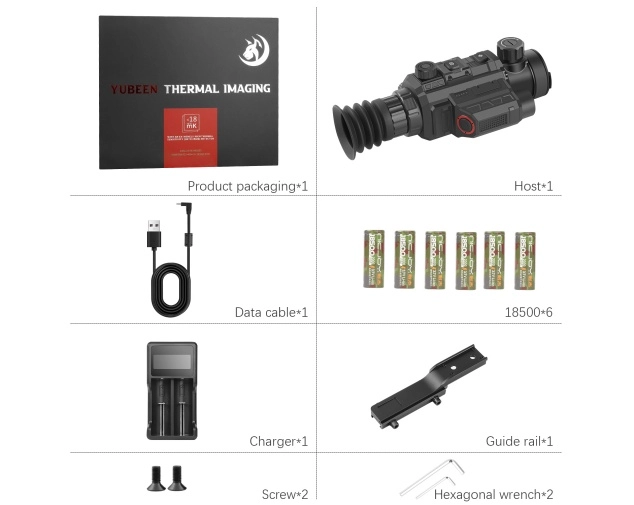
Night observation is not just about seeing farther. In the field, you may need to read a dark tree line, check a heat source near wet grass, or tell whether a shape at distance is worth a closer look. A few seconds of poor image detail can waste time. A wrong read can also create safety risk.
That is why thermal imaging rifle scopes in 2026 are being judged by more than basic night visibility. Sensor resolution, NETD sensitivity, field of view, laser rangefinding, battery life, weather resistance, and real service support all matter.
Yubeen is a thermal imaging and optical scope manufacturer based in Yiwu, China, with R&D and production focused on visual solutions for night, low-light, hunting, and outdoor observation use. Its product line is useful for buyers who need practical imaging quality, smart ballistic support, and OEM/ODM cooperation without turning the buying process into a long technical puzzle.
Why Do Thermal Imaging Rifle Scopes Matter for Night Observation in 2026?
Heat Signature Detection in Full Darkness
A thermal imaging rifle scope does not rely on visible light. It reads infrared energy from objects and turns heat differences into an image. This helps when your eyes see only black ground, tree shadow, or foggy open space.
In real night observation, this matters more than many first-time buyers expect. A warm animal body, a recently used vehicle, or a person walking across a colder field can stand out because the device reads heat contrast, not color. That is the basic reason thermal scopes stay useful when ordinary vision drops.
Clearer Viewing Beyond Low Light
Low-light tools still need some light. Thermal imaging works in another way. It can help you spot targets in darkness, through light brush edges, or across damp terrain where visual contrast is weak.
For practical users, the key number is not only magnification. NETD matters. A lower NETD helps the scope detect smaller temperature differences. In plain words, it can make the outline less muddy when the target and background are close in temperature. For long nights, that small difference feels very real.
Smarter Judgments Before Moving
A good night observation setup gives you time to judge, not just react. Range, shape, movement, and background all need to be checked. This is where laser rangefinding, picture-in-picture, hotspot tracking, and video recording become useful.
A small field comment here: when the weather turns wet, many users stop caring about fancy menu names and start caring about whether the image still looks clean. That is where solid sensor data and weather protection become buying factors, not brochure details.
What Specs Should You Compare Before Buying?
Sensor Resolution and Thermal Sensitivity
Sensor resolution affects detail. NETD affects how well the scope reads slight heat differences. If you only scan short range, a 384×288 sensor can already be useful. If you often check longer distance or need stronger detail, 640×512 gives a clearer base image.
| Specification | Why It Matters in Night Observation | ET35 LRF | DT50LRF |
|---|---|---|---|
| Sensor Resolution | Image detail and target outline | 384 × 288 | 640 × 512 |
| Pixel Pitch | Detail density and image structure | 12 μm | 12 μm |
| Frame Rate | Smoother moving image | 50 Hz | 50 Hz |
| NETD | Smaller heat difference detection | <18 mK | <18 mK |
| Response Waveband | Thermal radiation reading range | 8–14 μm | 8–14 μm |
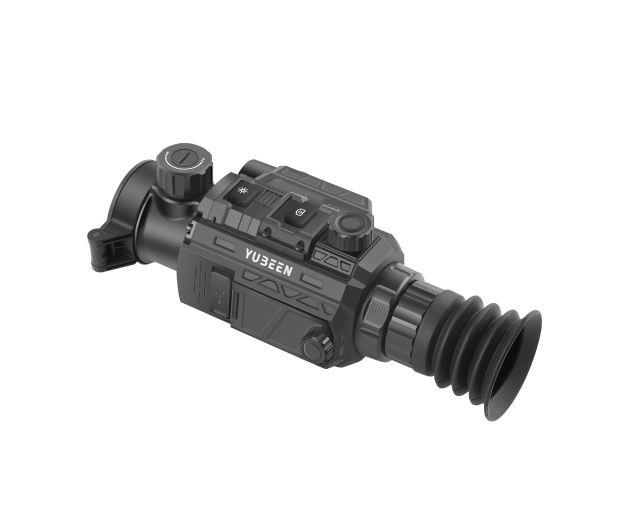
The ET35 LRF is a balanced option if you want dependable thermal imaging without carrying a larger long-range model. Its 384×288 sensor, 12μm pixel pitch, 50Hz refresh rate, and <18mK NETD make it suitable for field scanning, night observation, and general hunting observation.
Lens Size and Detection Range
Lens size changes the way a scope feels in use. A 35mm lens usually gives a practical balance for scanning and mid-range work. A 50mm lens is more focused on distance and detail.
ET35 LRF uses a 35mm F1.0 lens and reaches up to 1,800m detection range. DT50LRF uses a 50mm F1.0 lens and reaches up to 2,600m. The difference is simple. If you move often and need a wider working feel, ET35 LRF is easier to place in more scenarios. If your main concern is longer-range detail, DT50LRF is the stronger pick.
Field of View and Base Magnification
A narrow view can make scanning slow. Too much focus on high magnification can also make the first search harder. That is why field of view and base magnification should be checked together.
ET35 LRF has a 7.53° × 5.65° field of view with 3.03x base magnification. DT50LRF has an 8.78° × 7.03° field of view with 2.6x base magnification. On paper, DT50LRF gives a wider view with higher sensor detail, while ET35 LRF keeps a compact and balanced field style.
Which Scope Fits Your Night Observation Need?
ET35 LRF for Balanced Field Use
Choose ET35 LRF if you want a thermal imaging rifle scope that feels practical for mixed night observation. It is suitable for users who need clear heat detection, laser rangefinding support, multiple image modes, and a field-ready structure without moving straight into a larger premium model.
It also has features that matter after the first hour outside: 64GB storage, onboard video recording, recoil-activation recording, five zeroing profiles, Type-C external power support, and IP67 protection. Its 530g body weight also helps if you care about carrying comfort.
DT50LRF for Long-Range Detail
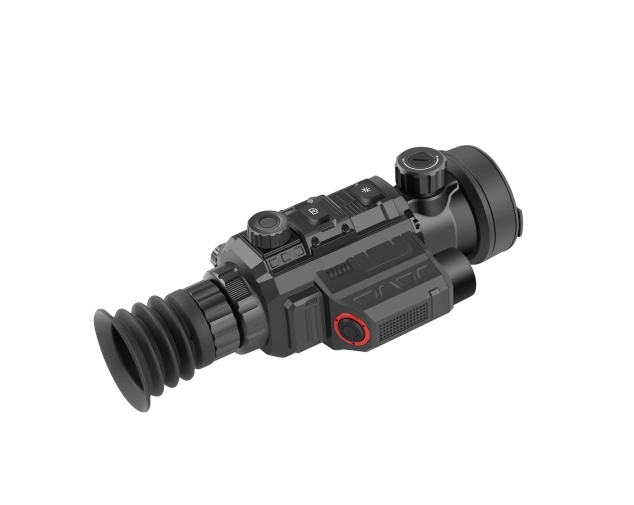
Choose DT50LRF if you want stronger image detail and longer detection reach. Its 640×512 sensor, 50mm lens, <18mK NETD, and 2,600m detection range make it more suitable for open terrain, longer observation lines, and users who compare small heat signatures at distance.
This model also brings PIP, DPC, hotspot functions, hot track, reticle support, onboard video recording, 64GB built-in storage, and three ballistic calculation types. For buyers who need a more complete feature set, DT50LRF is the cleaner recommendation.
Simple Choice by Scenario
| User Scenario | Better Fit | Main Reason |
|---|---|---|
| Mixed field scanning | ET35 LRF | Balanced 35mm lens and 1,800m detection |
| Longer open-area observation | DT50LRF | 50mm lens and 2,600m detection |
| Higher image detail | DT50LRF | 640×512 sensor |
| Lighter carrying feel | ET35 LRF | 530g body weight |
| More advanced feature package | DT50LRF | PIP, DPC, hot track, 64GB storage, ballistic support |
The simple rule is this: choose ET35 LRF when you need balance and easier field handling. Choose DT50LRF when image detail and long-range observation matter more.
How Do Smart Features Improve Real Use?
Laser Rangefinding and Ballistic Support
Laser rangefinding helps you make better distance judgments at night. In low light, distance can feel deceptive, especially across open ground. A built-in LRF removes some guesswork.
Yubeen also adds smart ballistic modes, including remark ballistic, ballistic fitting, and ballistic calculation. For less experienced users, this can reduce the pressure of manual setup. For experienced users, it gives more ways to adapt the device to different field needs.
Picture-in-Picture and Hotspot Tracking
Picture-in-picture is useful because it lets you keep the wider scene while checking a smaller detail area. This is helpful when a heat source appears at the edge of a field or near brush.
Hotspot tracking helps draw attention to warmer areas. It does not replace judgment, but it can speed up scanning. In night observation, that is often enough to make the device feel more efficient in real use.
Recording and Power Support
Recording is not only for sharing footage. It helps with review, training, product testing, and checking what happened during a short observation window. Both product lines support onboard video recording, and the DT50LRF page lists built-in EMMC 64GB storage.
Battery life is another practical point. DT50LRF uses two replaceable 18500 batteries and runs for at least 4.5 hours at 25°C with hotspot off. It also supports Type-C external power. For long outdoor use, that detail is not small.
Why Should Professional Buyers Consider Yubeen in 2026?
OEM and ODM Support for Different Markets
Professional buyers rarely buy only one model for one user. Distributors may need different price levels, menu languages, packaging, or market positioning. Yubeen supports OEM and ODM cooperation, as well as agency cooperation for selected markets.
The product range also covers high-tech models and cost-effective choices. That helps dealers build a wider product mix instead of forcing every customer into one price band.
Durability and Warranty Confidence
Outdoor thermal scopes face rain, dust, recoil, cold mornings, hot storage, and long transport. DT50LRF is rated IP67, works from -30°C to 55°C, and weighs 654g without battery. ET35 LRF also uses an IP67 housing and works across the same temperature range.
Yubeen provides a two-year warranty for the whole unit. For quality issues, the stated policy is replacement rather than repair. That point is worth noting for B2B buyers who care about after-sales time and customer trust.
Service and Contact for Bulk Cooperation
For bulk buyers, the service process matters as much as product specs. Yubeen supports sample delivery, sample confirmation, bulk order, factory visit, domestic delivery, and international delivery. Payment by TT or bank transfer is also available.
If you are comparing thermal imaging rifle scopes for 2026, start with the real use case. ET35 LRF is better for balanced field observation. DT50LRF is better for long-range detail and advanced functions. For dealer cooperation, OEM/ODM needs, or model selection, the next step is to contact the service team and confirm the right product mix before bulk order.
FAQ
Q: What Is the Best Thermal Imaging Rifle Scope for General Night Observation?
A: ET35 LRF is a strong fit if you want balanced performance, lighter handling, 1,800m detection range, <18mK NETD, and useful field features without moving into a larger long-range model.
Q: Which Scope Is Better for Long-Range Night Observation?
A: DT50LRF is better for long-range use because it has a 640×512 sensor, 50mm F1.0 lens, <18mK NETD, and up to 2,600m detection range. It also has PIP, hot track, 64GB storage, and ballistic support.
Q: What Should B2B Buyers Check Before Ordering Thermal Imaging Rifle Scopes?
A: Buyers should check sensor resolution, NETD, lens size, detection range, field of view, battery life, IP rating, warranty policy, OEM/ODM support, sample process, and service response. These points affect both user experience and after-sales cost.
