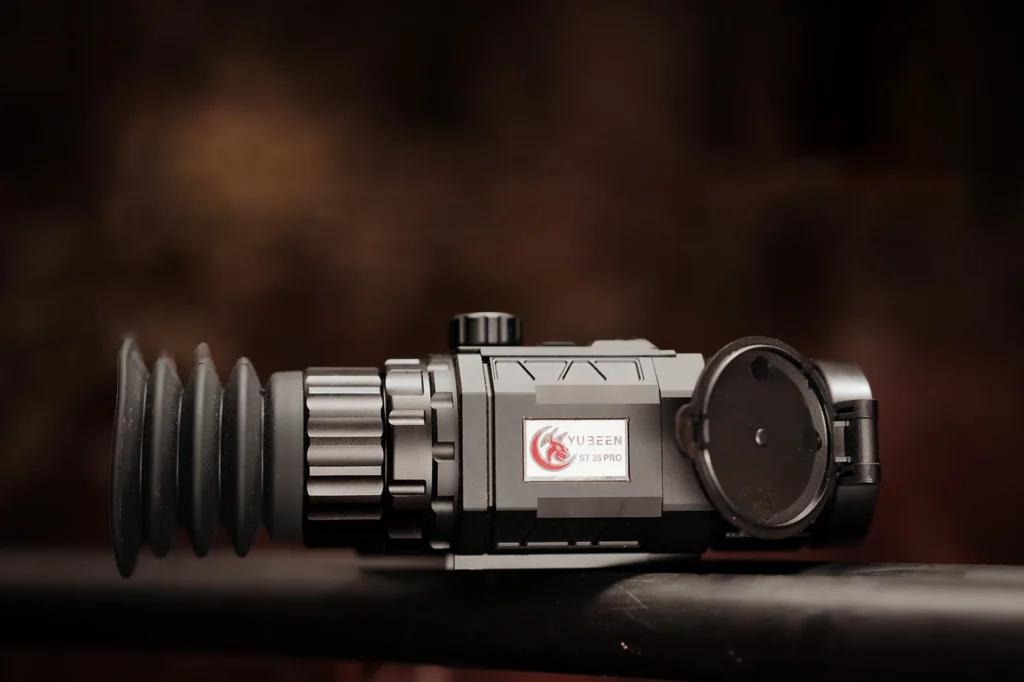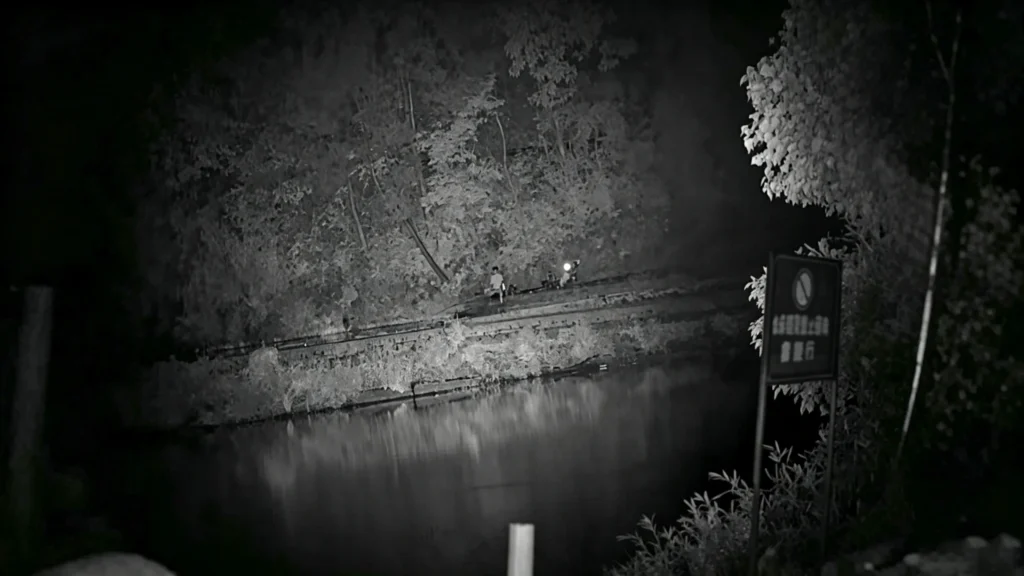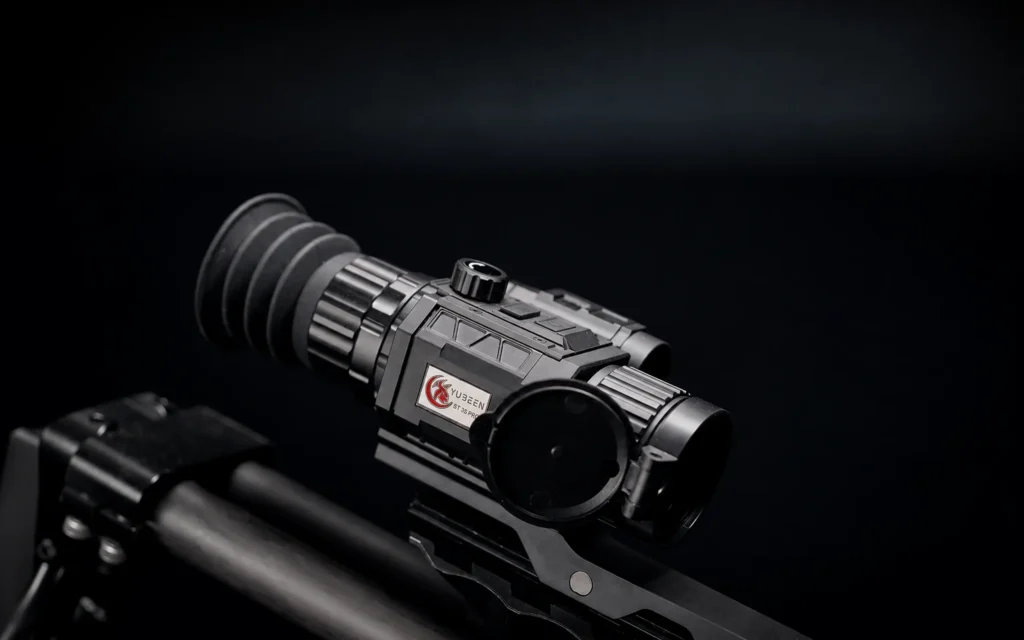
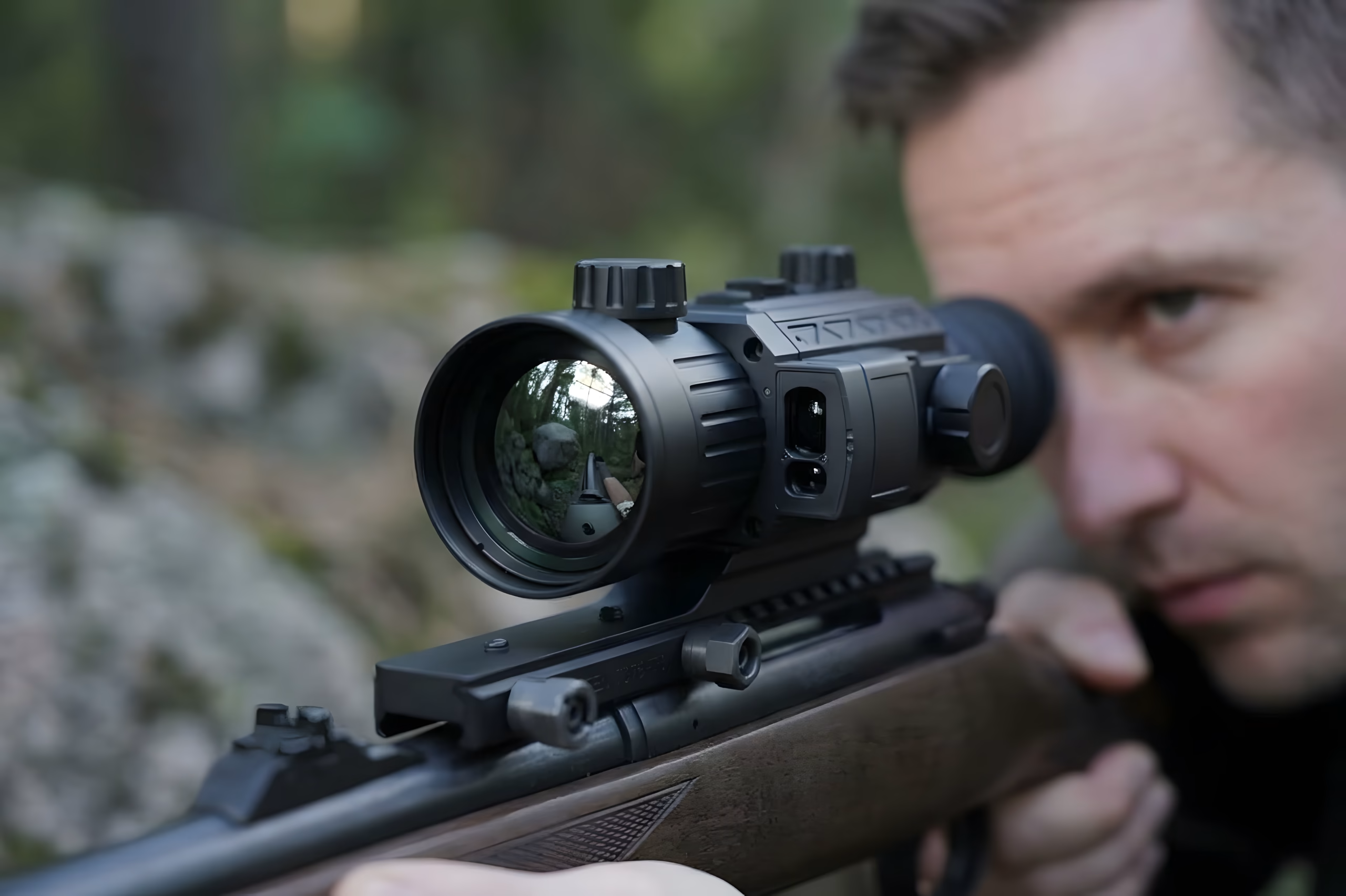
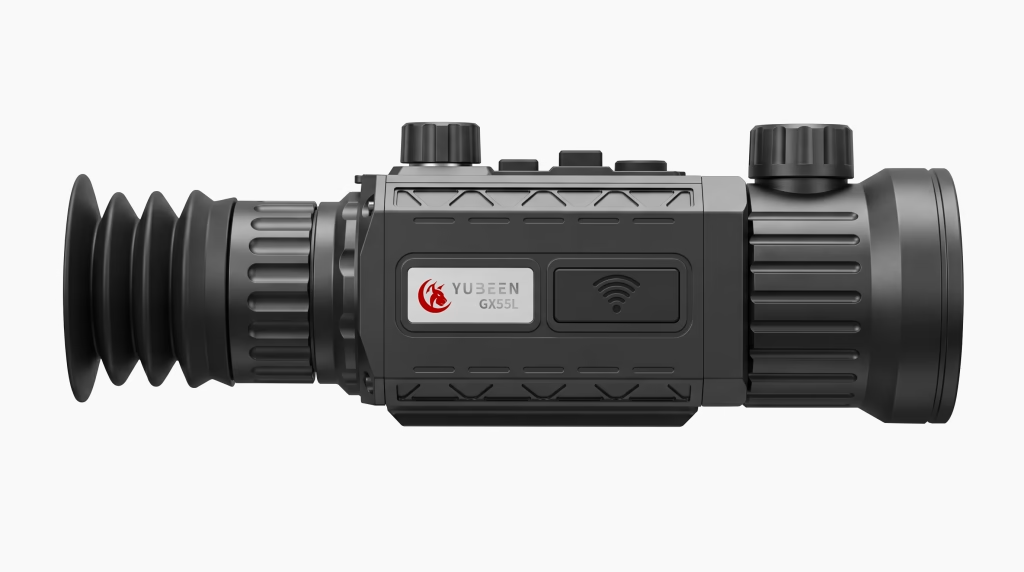
The YUBEEN GX55L brings a 640 × 512 thermal detector, a 50 mm F1.0 objective and an integrated laser rangefinder into a single field-oriented thermal imaging riflescope. Its purpose is straightforward: to support a continuous sequence of observation, distance measurement and image review without repeatedly changing devices. AI-assisted image processing, a high-resolution OLED display and practical recording functions complete the configuration.
As an upcoming model in the YUBEEN thermal imaging range, the GX55L is designed around the interaction of these systems rather than one headline specification. This preview explains how its optical, electronic and mechanical features work together, what its published specifications mean in practice, and which details matter when assessing the unit for outdoor use. Final launch timing and market-specific availability will be announced separately.
An Integrated Workflow: Observe, Range and Record
An effective thermal imaging scope has to do more than produce a recognizable heat signature. The operator must be able to hold the scene in view, adjust its presentation, check a distance when needed and keep a record of the observation. The GX55L combines thermal imaging, integrated ranging, a configurable viewing interface and internal recording so that these tasks can be handled through one device.
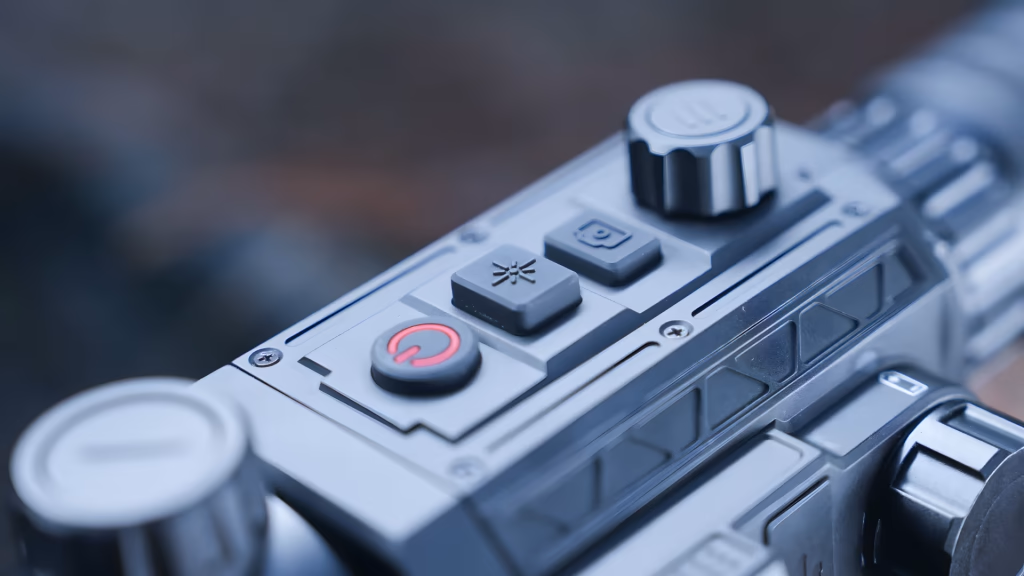
The GX55L’s controls are organized for direct access to frequently used functions. A multifunction dial supports viewing adjustments and menu navigation, while dedicated controls provide access to rangefinding, power, image capture and Picture-in-Picture (PiP). A separate focus adjustment lets the user refine the thermal image as observation distance changes. The objective is to keep imaging and ranging operations accessible within the same device.
In practical use, this integration reduces the need to switch between a thermal sight, a separate rangefinder and another recording device. The controls, display and built-in storage are part of the same observation workflow.
640 × 512 Thermal Imaging: Resolution, Sensitivity and Motion
The GX55L uses an uncooled vanadium oxide (VOx) detector with 640 × 512 native resolution, 12 μm pixel pitch and a 50 Hz frame rate. These figures describe different aspects of image capture. Resolution defines the detector’s sampling grid, pixel pitch describes the spacing of those elements, and frame rate determines how often fresh thermal frames are available. The 50 Hz output is intended to maintain a more continuous presentation during scanning and subject movement, without increasing the detector’s native spatial resolution.
Thermal sensitivity is specified as an NETD of <20 mK at 25°C, F#1.0. NETD describes the detector’s ability to resolve small temperature differences under defined test conditions; it is not a universal measure of identification distance. Lower thermal contrast can occur when an animal and its surroundings approach similar temperatures, or when background conditions reduce the separation between warm and cool areas. In these situations, the combination of detector sensitivity, suitable focus and image processing becomes particularly relevant.
Real-world visibility still depends on distance, target size, atmospheric conditions and intervening objects. Thermal imaging detects infrared radiation; it cannot recover a clear view through an opaque obstruction or dense vegetation. The specification establishes the GX55L’s imaging foundation, while field evaluation determines how that foundation performs in a particular environment.
For a deeper explanation of detector sampling and refresh rate, see Thermal Imaging FPA Explained.
Why the 50 mm F1.0 Objective Matters
The 50 mm F1.0 objective forms the optical input to the detector. Its aperture helps collect incoming long-wave infrared energy before the image is processed, making the lens an essential part of the same performance chain as NETD and detector resolution. The nominal focus range begins at approximately 5 m and extends to infinity, allowing the user to adjust the scene for the intended observation distance.
The GX55L has 2.7× base magnification and a total 2.7×–21.6× viewing range with digital zoom. The 50 mm focal length influences image scale and angular coverage, but it does not establish a fixed detection, recognition or identification distance. Dense woodland, mixed vegetation and open ground place different demands on field of view and the amount of detail visible at a distance.
AI-Assisted Imaging: Improving the Presentation of Captured Detail
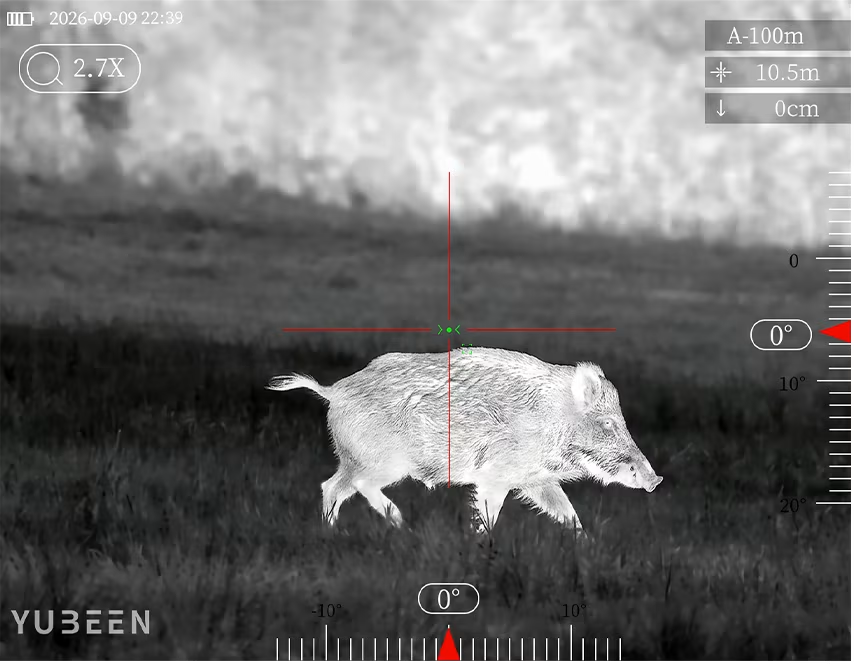
The GX55L incorporates AI-assisted image processing to refine the presentation of captured thermal information. Its functions include intelligent noise reduction, processing intended to limit the effect of environmental interference, and scene-oriented adjustments. Forest, Plain and Mountain modes adjust image detail, brightness and contrast to suit different backgrounds. These functions complement the detector and optics; their visible effect will depend on the scene and operating conditions.
The GX55L offers 1×–8× digital zoom, giving a total magnification range of 2.7×–21.6×. Image processing provides detail compensation during enlargement to help maintain a readable image. Digital zoom does not change the physical resolution of the 640 × 512 detector: enhancement works with captured information rather than adding new native sensing elements.
The GX55L also offers White Hot, Black Hot, Red Hot and Fusion palettes. These change how thermal information is mapped on the display, helping users choose a presentation that suits the scene and their viewing preference. They do not change what the detector physically measures.
Integrated 1,000 m LRF: Distance Within the Thermal View
A laser rangefinder answers a different question from the thermal imager. The thermal image helps reveal a subject’s heat signature; the LRF returns a measured distance. The GX55L integrates a 905 nm, Class 1 laser rangefinder with a specified measurement range of 3–1,000 m and stated accuracy of ±1 m. Because the ranging function is built into the scope, the user can obtain distance information without switching to a separate handheld instrument.
Integrated ranging is valuable when field observation involves repeated transitions between scanning and measuring distance. It maintains continuity in the viewing workflow without changing the detector’s imaging performance. As with other laser rangefinders, successful measurement depends on target reflectivity and environmental conditions. The stated 1,000 m maximum is a ranging specification, not a thermal identification distance.
For a general comparison of integrated and separate rangefinding workflows, read LRF vs. Non-LRF Thermal Scopes.
1920 × 1080 OLED, Picture-in-Picture and Calculation Support
The processed thermal scene is presented on a 0.49-inch OLED with 1920 × 1080 display resolution. A high-resolution microdisplay can make interface information and image presentation easier to read, but it does not change the native 640 × 512 detector resolution. The viewing assembly specifies 40 mm eye relief, a 7 mm exit pupil and diopter adjustment from −5D to +5D.
Picture-in-Picture (PiP) provides a magnified view while retaining the wider scene. Crosshair-centered zoom keeps the area of enlargement referenced to the reticle rather than shifting the operator’s point of interest across the screen. The system also includes ballistic calculation support using configurable parameters such as distance, angle, wind speed, temperature and atmospheric pressure. Any calculated result is a reference that depends on accurate inputs and a verified equipment setup; it does not replace the operator’s assessment.
Field Hardware, Battery Management and Connectivity
The GX55L has a magnesium–aluminium alloy housing, an IP67 ingress-protection rating and a specified operating temperature range of −30°C to +55°C. Its recoil-resistance specification is 1,200 g / 0.4 ms. These are relevant indicators for demanding field environments, although operating conditions, maintenance and correct installation continue to matter. The scope measures 195 × 75 × 69 mm and weighs approximately 635 g without the battery.
Power comes from a removable 18650 lithium-ion battery. YUBEEN specifies at least four hours of operation at 25°C with the hotspot disabled; actual runtime varies with ambient temperature, battery condition and feature use. The USB Type-C interface accepts a DC 5 V / 2 A external power supply while the unit operates. It is an external power input, not an in-device battery charger: the 18650 cell must be charged with a suitable separate charger.
For documentation and sharing, the GX55L offers photo and video recording, 64 GB of built-in eMMC storage and wireless connectivity including Wi-Fi and Bluetooth. Supported application platforms are listed as iOS, Android and HarmonyOS. These functions extend the observation workflow beyond the eyepiece, allowing material to be reviewed and transferred where supported by the accompanying software.
GX55L Specifications at a Glance
| Specification | GX55L |
|---|---|
| Thermal detector | Uncooled VOx; 640 × 512; 12 μm; 50 Hz |
| Thermal sensitivity / spectral range | <20 mK NETD (25°C, F#1.0); 8–14 μm |
| Objective and focus | 50 mm F1.0; approximately 5 m to infinity |
| Magnification | 2.7× base; 1×–8× digital zoom; 2.7×–21.6× overall |
| Display and viewing | 0.49-inch OLED; 1920 × 1080; PiP; multiple reticle options |
| Eye relief / exit pupil / diopter | 40 mm / 7 mm / −5D to +5D |
| Integrated laser rangefinder | 905 nm; Class 1; 3–1,000 m; stated accuracy ±1 m |
| Color palettes | White Hot / Black Hot / Red Hot / Fusion |
| Storage and recording | 64 GB eMMC; photo (JPG) and video (MP4) |
| Connectivity | Wi-Fi / Bluetooth; iOS / Android / HarmonyOS app support |
| Battery and runtime | Removable 18650 Li-ion; ≥4 h at 25°C, hotspot disabled |
| External power | USB Type-C, DC 5 V / 2 A; no in-device battery charging |
| Enclosure and field rating | Magnesium–aluminium alloy; IP67; −30°C to +55°C |
| Recoil resistance | 1,200 g / 0.4 ms |
| Dimensions / mass | 195 × 75 × 69 mm; 635 g (excluding battery) |
Specifications reflect current product documentation and may be refined before commercial release.
Who Is the GX55L Designed For?
The GX55L is best suited to users who want a 640-class thermal imaging platform with integrated distance measurement and a strong set of viewing and recording functions. It is particularly relevant when field routines involve repeated scanning, range checks, image review and battery management rather than occasional basic observation alone.
Potential applications include hunting, lawful pest-control work and outdoor observation where local regulations permit. The right configuration remains dependent on terrain, typical subject distance, mounting needs and operating conditions. GX55L’s value lies in bringing the relevant imaging, ranging and control functions together—not in claiming that any single specification will suit every setting.
FAQ
Does the YUBEEN GX55L include a built-in laser rangefinder?
Yes. The integrated 905 nm, Class 1 laser rangefinder has a specified measurement range of 3–1,000 m and stated accuracy of ±1 m. The 1,000 m figure refers to laser ranging, not the distance at which the thermal image can reliably identify a subject.
Does the 1920 × 1080 OLED increase the GX55L’s native thermal resolution?
No. The GX55L uses a 640 × 512 thermal detector. Its 1920 × 1080 OLED presents the processed image and on-screen interface, but the higher display resolution does not increase the detector’s native resolution.
Can the GX55L operate from USB Type-C power and charge its 18650 battery internally?
The GX55L can operate using an external DC 5 V / 2 A power source through its USB Type-C interface. The port does not charge the removable 18650 battery inside the scope; a suitable separate charger is required.
Is the GX55L available for distributors or evaluation samples?
The GX55L is currently presented as an upcoming model. Launch timing, market availability and evaluation-sample schedules are subject to confirmation. Contact YUBEEN for current technical information, distributor discussions and sample enquiries.
Launch Status and Product Enquiries
The YUBEEN GX55L is an upcoming thermal imaging riflescope. Final launch timing, commercial availability, regional distribution arrangements and evaluation-sample schedules have not yet been announced. Current product specifications are presented for advance technical review and may be updated before release.
To request detailed technical information, discuss distributor pricing or enquire about evaluation samples, contact the YUBEEN international team through the links below.
You can also explore YUBEEN’s current thermal imaging range while GX55L launch details are being finalized.