


How to Upgrade Your Rifle: The 2026 Guide to First and Second Focal Plane Scopes
Why Should You Care About Focal Planes in 2026?
The internal construction of your scope dictates how you interact with your target. The placement of the reticle—either in the front or rear of the magnification lens—changes everything about your sight picture and how you hold for wind or elevation. You must grasp these mechanical differences to build a highly accurate rifle system.
They Dictate Reticle Scaling Behaviors
The physical placement of the etched glass determines your visual feedback. In a First Focal Plane (FFP) scope, the manufacturer places the reticle in front of the magnifying lenses. When you adjust the magnification ring, the reticle grows and shrinks proportionally with your target. In a Second Focal Plane (SFP) scope, the reticle sits behind the magnification lenses. This mechanical setup means the reticle remains a fixed, static size regardless of how much you magnify the image.
They Alter Trajectory Calculation Methods
Your choice of focal plane drastically impacts how you apply firing data. Trajectory refers to the path of various projectiles from the starting point to the end point of the launch. You must account for the initial velocity of the bullet, which is the instantaneous speed of the bullet from the muzzle. Because an FFP reticle scales with the target, the hash marks represent the exact same measurement at 3x power as they do at 15x power. This allows you to apply bullet drop compensation at any zoom level. With an SFP scope, those measurements are only accurate at one specific magnification setting, usually the maximum power.
They Influence Target Acquisition Speed
Acquiring a target quickly requires a clear, unmistakable point of aim. SFP scopes shine in rapid-engagement scenarios because the crosshairs remain thick and visible even at the lowest power settings. In contrast, an FFP reticle shrinks significantly at low power, which can sometimes look like a faint cross on a dark background. You must establish a zeroing distance, setting an initial shooting reference point that systematically combines the sight and the gun at a suitable distance. Doing so with a highly visible SFP reticle speeds up your reaction time when a target suddenly appears within close range.
Table 1: FFP vs SFP Core Mechanics Comparison
| Feature | First Focal Plane (FFP) | Second Focal Plane (SFP) |
|---|---|---|
| Reticle Scaling | Proportional to target size | Fixed size at all times |
| Subtension Accuracy | Accurate at all magnifications | Accurate at one specific magnification |
| Low Power Visibility | Thin, can be hard to see without illumination | Thick, highly visible |
| High Power Thickness | Thick, may obscure tiny targets | Thin, precise for pinpoint aiming |
| Best Application | Long-range precision, dynamic distances | Close-quarters, fixed-distance hunting |
Which Focal Plane Fits Your Shooting Style?
Selecting the right mechanical setup depends entirely on your operational environment and shooting habits. You need to match the tool to the exact distances and target types you engage most frequently.
FFP Suits Long-Range Precision Shooters
When you push past 500 yards, environmental factors dictate your success. You must account for temperature and altitude, which are parameters that can be easily queried on a mobile phone. Furthermore, you have to calculate the ballistic coefficient, a parameter that reflects the relative efficiency of the projectile in overcoming air resistance. As the ballistic coefficient increases, the resistance effect decreases and the range increases. An FFP scope allows you to dial back your magnification to widen your field of view to spot bullet impacts, while still using the reticle hash marks accurately to hold for wind and bullet drop.
SFP Benefits Close-Quarters Tacticians
If you operate in heavy brush or clear confined spaces, SFP provides distinct tactical advantages. You do not have time to search for a tiny, shrunken reticle against dark foliage. The constant, bold crosshair of an SFP optic acts quickly to guide your eye directly to the center. For engagements under 200 yards, you rarely need complex ballistic holdovers, making the static size of the SFP reticle an asset rather than a limitation.
Both Options Serve General Hunters
General field use requires versatility, and both platforms work effectively if you apply the correct data. Bullets of different weights are subject to different gravitational forces after leaving the muzzle, which affects the trajectory change. The weight of the bullet can be obtained from the specification sheet of the purchased bullet or weighed by yourself. Whether you prefer the proportional scaling of an FFP or the constant visibility of an SFP, you must input accurate initial velocity, weight, and line height data into your ballistic device to achieve a precise hit.
How Do Premium Scopes Elevate Your Rifle Setup?
Modern manufacturing techniques provide shooters with incredibly capable optics. Let us examine two specific configurations designed to meet distinct tactical and hunting demands, giving you the edge in the field.
VX1.2-6X24FFPIR Delivers Dynamic Targeting
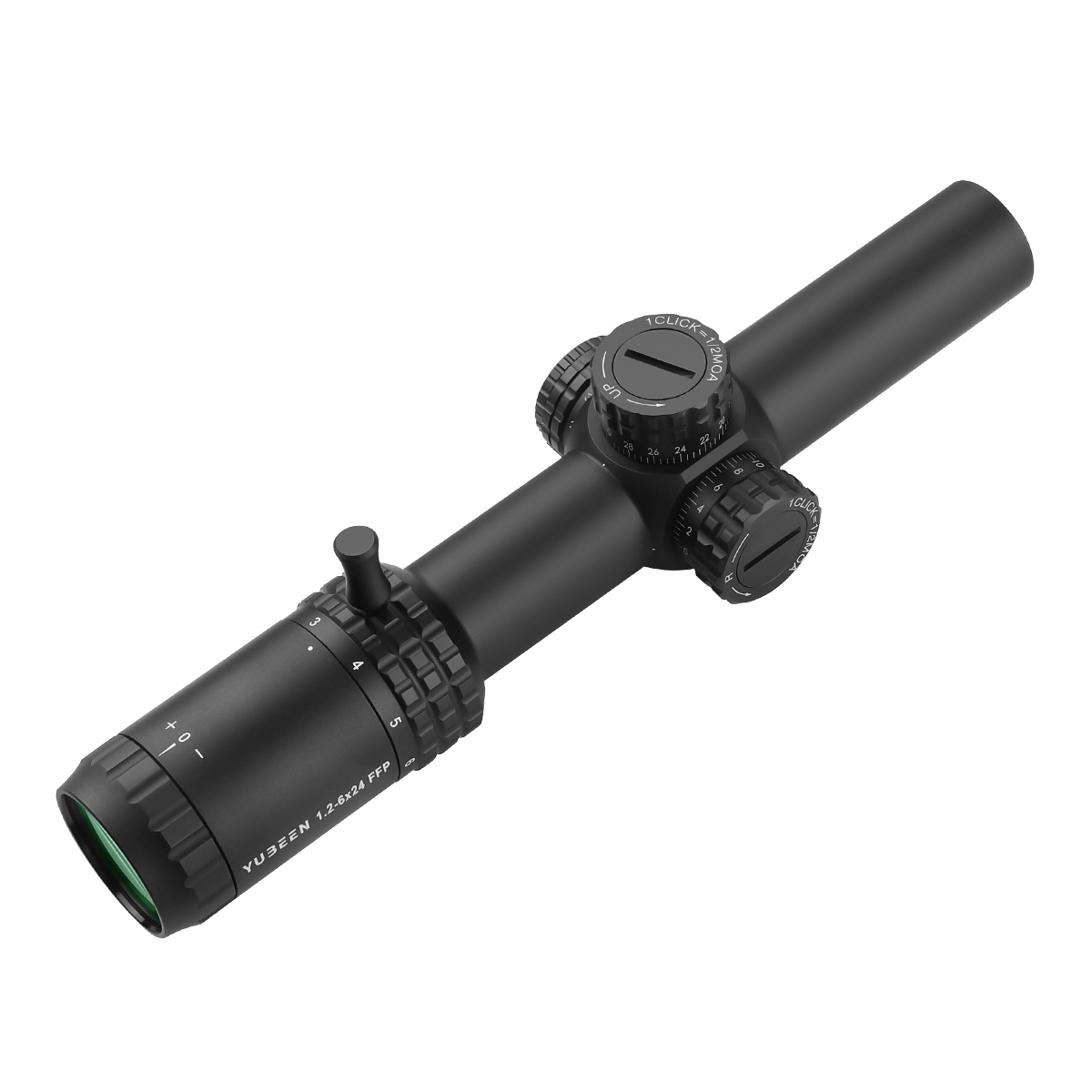
This specific optic represents a highly versatile Low Power Variable Optic (LPVO) designed for fluid tactical environments. Featuring a 1.2-6x magnification range with a First Focal Plane design, it allows you to utilize accurate holdovers at 3x, 4x, or 6x seamlessly. This is highly beneficial when you need to transition rapidly from close quarters to mid-range engagements without stopping to adjust turrets or run complex math. The illuminated reticle counters the typical FFP drawback at low power, giving you a bright aiming point for fast acquisition.
VX2-12X40SFIR Maintains Consistent Visibility
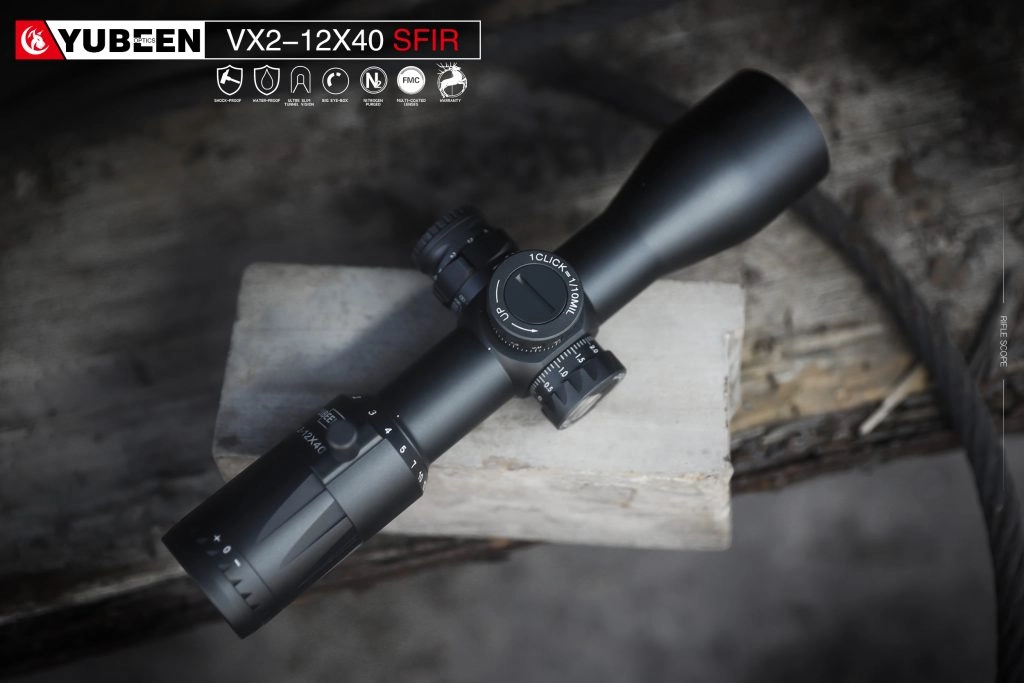
For those who prioritize a bold sight picture, this Second Focal Plane model provides exceptional clarity. The 2-12x magnification range covers almost any hunting scenario, from dense woods to open clearings. Because the reticle size remains constant, you never lose sight of your crosshairs against dark backgrounds. This makes it an ideal choice for low-light conditions at dawn or dusk, where you need immediate target acquisition without relying entirely on internal illumination.
Clear Optics Calculate Ballistics Accurately
High-quality glass directly impacts your ability to gather firing data. You must measure the baseline height, which refers to the height difference between the optical axis of the sight and the barrel. Superior optical clarity allows you to spot your own bullet impacts and trace, letting you confirm if your initial velocity—measured using professional speed measuring equipment—matches your real-world trajectory. Good glass acts as the ultimate feedback mechanism for your ballistic inputs.
Table 2: Tactical Optical Specifications Overview
| Specification | 1.2-6X24 Model | 2-12X40 Model |
|---|---|---|
| Magnification Range | 1.2x to 6x | 2x to 12x |
| Objective Lens Diameter | 24mm | 40mm |
| Focal Plane | First Focal Plane (FFP) | Second Focal Plane (SFP) |
| Tube Diameter | 30mm | 30mm |
| Illumination Type | Red/Green Variable | Red/Green Variable |
What Factors Decide Your Final Scope Choice?
Beyond the focal plane mechanics, your purchasing decision rests on several practical elements of the scope’s construction. You must evaluate these factors to match the optic to your specific mission requirements.
Your Magnification Range Requirements
Evaluate your typical shooting environment. If you shoot exclusively inside 300 yards, a 1-6x or 1-8x optic gives you all the magnification you need while keeping the rifle lightweight and agile. If you hunt in vast, open terrain and need to identify targets at 600 yards or beyond, stepping up to a 2-12x or even a 4-16x optic provides the necessary resolution to confirm your target before engaging.
The Reticle Visibility Across Distances
Analyze the lighting conditions you face most often. If you shoot in bright daylight, almost any reticle works well. However, if you operate in heavy timber or fading light, a thin FFP reticle can completely vanish. You need to look for equipment with robust daytime-bright illumination to keep the reticle highly visible, regardless of the focal plane configuration you select.
Your Environmental Durability Standards
Tactical equipment must survive brutal recoil and severe weather conditions. Precision internal mechanisms must track perfectly after taking physical hits. You should look for ruggedized housings, similar to premium thermal systems that feature IP67-rated enclosures, which withstand extreme environmental conditions from -30°C to +55°C. A tough exterior guarantees your zeroing distance remains locked in place during transport and field use.
How Can You Access Our Services and Support?
Once you determine the right optical configuration for your business, you need a dependable acquisition channel and reliable aftermarket care. We provide a streamlined B2B framework to support your distribution networks.
Through OEM and ODM Customization
YUBEEN fully support both OEM and ODM production lines, allowing you to customize optical equipment for your brand. You can also apply for exclusive agency or national-level agency rights, giving you a competitive advantage in your specific geographic market.
Via Two-Year Warranty Coverage
We stand behind our manufacturing quality by offering a strict two-year warranty on the entire unit. If you encounter any quality issues with the scopes, we operate on a replacement-only policy, completely eliminating repair wait times and keeping your supply chain moving.
By Following Our Ordering Process
We have structured a highly efficient B2B ordering process for global clients. It begins with sample delivery and confirmation, smoothly transitioning into bulk order execution. You can easily complete payments via TT or bank transfer, and we fully support both domestic and international shipping logistics. We also invite you to arrange a factory visit for in-depth cooperation and long-term business planning.
FAQs
Q: What is the main difference between FFP and SFP scopes?
A: In an FFP scope, the reticle size changes proportionally with the magnification, allowing for accurate holdovers at any zoom level. In an SFP scope, the reticle remains a fixed size, meaning holdover marks are only accurate at one specific magnification setting.
Q: How does baseline height affect my shooting trajectory?
A: Baseline height is the measurement between the optical axis of the sight and your rifle barrel. You must enter this exact height into your ballistic calculations to accurately predict bullet drop at various distances.
Q: Do you offer customization for bulk orders?
A: Yes, we provide comprehensive OEM and ODM support for bulk orders, along with exclusive agency opportunities and a two-year replacement warranty on all units.
