


Do Thermal Scopes Work in Bright Sunlight? What Hunters Should Know
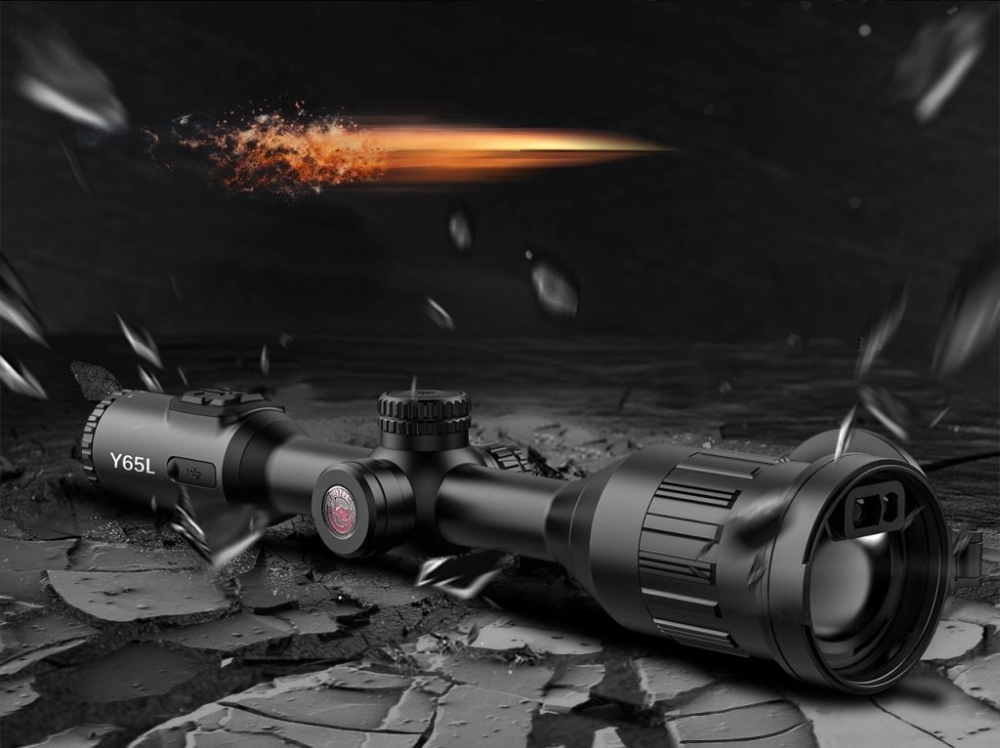
If you shop for serious hunting optics, Yubeen is worth a close look. Our company specialize in producing thermal imaging rifle scopes and optical scopes. Our R&D, production and sales all centered around our field experience, low light target identification and real hunting needs. A large selection of advanced thermal imaging models with various ballistic features, OEM/ODM serviceas well as a 2-year warranty policy for the whole unit are waiting for you here.
Do thermal scopes work in bright sunlight? Yes, they can. First, remember that a thermal scope does not depend on visible light the way an optical scope does. Instead, it reads the infrared radiation and turns those readings into a temperature image that you can view. That means you can use a thermal scope during the day, at dusk, at night, and in many low-visibility field conditions that would render an optical scope useless. But there is a caveat. Even on cool days, everything is going to be warmed up by the sun, including the ground, rocks, dry grass, tree trunks, fences, farm equipment and a host of other objects that will serve as your background.
It is true that your thermal scope will still work, but it is very likely that the contrast between your prey and the background will be somewhat diminished. For most hunters, this is a big deal. It can save a lot of time in tracking down your prey or it can cost you valuable time and hamper your chances at a good shot when a washed out thermal scene could have been a clear heat signature.
Do Thermal Scopes Really Work in Bright Sunlight?
A thermal scope can work in daylight because it reads heat, not sunlight. That single point clears up a common myth. You are not looking for a brighter image in the normal visual sense. You are looking for contrast between temperatures.
Still, daylight use is not always equal. Early morning, noon, and late afternoon can look very different through the same scope. If you hunt open ground, mixed woods, hillsides, or dry fields, you will notice those changes fast.
Thermal Detection Based on Heat
Every object above absolute zero gives off infrared energy. A thermal imaging device collects that energy and builds an image from temperature differences. The knowledge base describes this process as a thermal sensor detecting minute temperature differences and forming pixels based on those differences.
That is why a deer, hog, coyote, or other warm animal can stand out even when the sun is high. The animal is not “lit up” by the sun. It is visible because its body temperature differs from the background.
This is also why bright sunlight does not damage a thermal scope in the same basic way it can affect some light-amplifying night vision devices. The real issue is not brightness. The real issue is heat balance.
Daylight Use Beyond Night Hunting
Many hunters think of thermal gear as a night tool first. That is fair, but it is too narrow. During the day, a thermal scope can help you scan field edges, check brush lines, find movement in shaded pockets, and pick up heat signatures that your eyes may miss.
Picture a dry field after sunrise. Your eyes see grass, dirt, shadows, and maybe a few fence posts. A thermal scope sees the heat map. A bedded animal near cover may show as a defined warm shape, especially before the land has fully heated.
This is where thermal gear pairs well with normal glass. You can scan with thermal, then use an optical scope or binoculars for visual confirmation when conditions allow. It is not about replacing every optic. It is about using the right tool at the right moment.
Bright Sunlight as a Contrast Challenge
Bright sunlight creates thermal clutter. A rock that sat in the sun for three hours may appear warmer than you expect. A metal gate can flare hot. Dry soil can hold heat. Even tree bark on the sunny side may look different from the shaded side.
That does not mean the scope failed. It means the scene is busy.
For daytime hunting, you need a thermal scope that can show fine contrast, keep edges clean, and handle digital zoom without turning the image into a blocky mess. This is why NETD, sensor resolution, display quality, image processing, and lens size all matter.
What Makes Daytime Thermal Images Harder to Read?
The hardest part of using a thermal scope in bright sunlight is not turning it on. The hard part is judging what the image is telling you. Midday heat can make the whole scene look noisy. If you know why that happens, you can scan smarter and choose better equipment.
Heated Ground and Background Noise
Open ground absorbs heat all morning. So do rocks, dirt roads, dry grass, and dark surfaces. Once those objects heat up, your image can show many warm zones at once.
That background noise matters because thermal imaging depends on temperature differences. If the field, brush, and target all sit close together on the heat scale, the image can lose punch. Your target may still be there, but the outline is less crisp.
A high-sensitivity detector helps here. The product knowledge base notes that thermal imaging can distinguish very small temperature differences, with sensitivity depending on the model. In real hunting terms, that means a better unit can show more detail when the scene gets tricky.
Similar Heat Signatures in Midday
Midday can be the hardest time for daytime thermal use. The sun has had hours to heat the land. Warm surfaces become common. Shaded and sunny patches create a mixed image.
This is why early morning and late afternoon often feel easier through thermal optics. The air and ground have not reached full heat balance, or they start cooling at different speeds. Animals can stand out more clearly against grass, brush, or soil.
If you must scan at noon, slow down. Move across the scene in sections. Watch for shape, movement, and repeatable heat patterns. Do not rely on brightness alone. A warm patch is not always a target.
Lower Detail With Weak Thermal Contrast
When heat contrast drops, image detail becomes more important. Low-resolution devices may still detect a heat source, but the shape can be vague. Electronic zoom can make this worse because every digital step spreads existing pixels across a larger view.
That is where higher-resolution sensors and advanced image processing help. For example, the Y55LRF product page lists a 640 × 512 sensor, 50 Hz frame rate, <15 mK NETD, 50 mm F1.0 lens, and 2600 m detection range. It also lists AI image processing designed to improve smoothness and clarity during enlargement.
For a hunter, that can mean cleaner scanning when the field is warm, smoother tracking when an animal moves, and less frustration when you zoom in for a second look.
Which Features Matter Most for Daytime Thermal Hunting?
When you shop for a thermal scope in 2026, it is easy to get lost in numbers. Some matter more than others in bright sunlight. The key is to connect each feature to a real field problem: weak contrast, long distance, moving targets, distance judgment, and image stability.
Low NETD Sensitivity
NETD tells you how small a temperature difference the device can detect. Lower is better. In bright sunlight, low NETD becomes especially useful because the background is full of small heat changes.
If a scope has a stronger ability to detect subtle heat differences, it can give you a more useful image when the target and background are close in temperature. That matters in fields, dry hills, brushy slopes, and sunlit pasture.
The Y65L product page lists a 1280 × 1024 max resolution, 25 Hz frame rate, 12 μm pixel interval, 8 to 14 μm response waveband, and NETD listed as less than 18 mK in the summary specifications. Its expanded specification section also lists less than 15 mK, so buyers should confirm the exact current spec when ordering.
| Feature | Why It Matters in Bright Sunlight | Field Concern It Helps Address |
|---|---|---|
| Low NETD | Shows smaller temperature differences | Warm backgrounds and weak contrast |
| Higher Sensor Resolution | Holds more target detail | Long-range scanning and zoom use |
| Larger/Faster Lens | Collects infrared energy efficiently | Cleaner image in mixed terrain |
| Strong Display | Shows detail your eye can actually use | Long sessions and fine target judgment |
| Image Processing | Reduces noise and improves edge clarity | Pixelation during electronic zoom |
High Resolution and Clear Display
Resolution is not just a bragging point. In the field, it affects how well you can judge shape, posture, and movement. A low-resolution thermal image may show a heat blob. A better image helps you decide what that heat blob is.
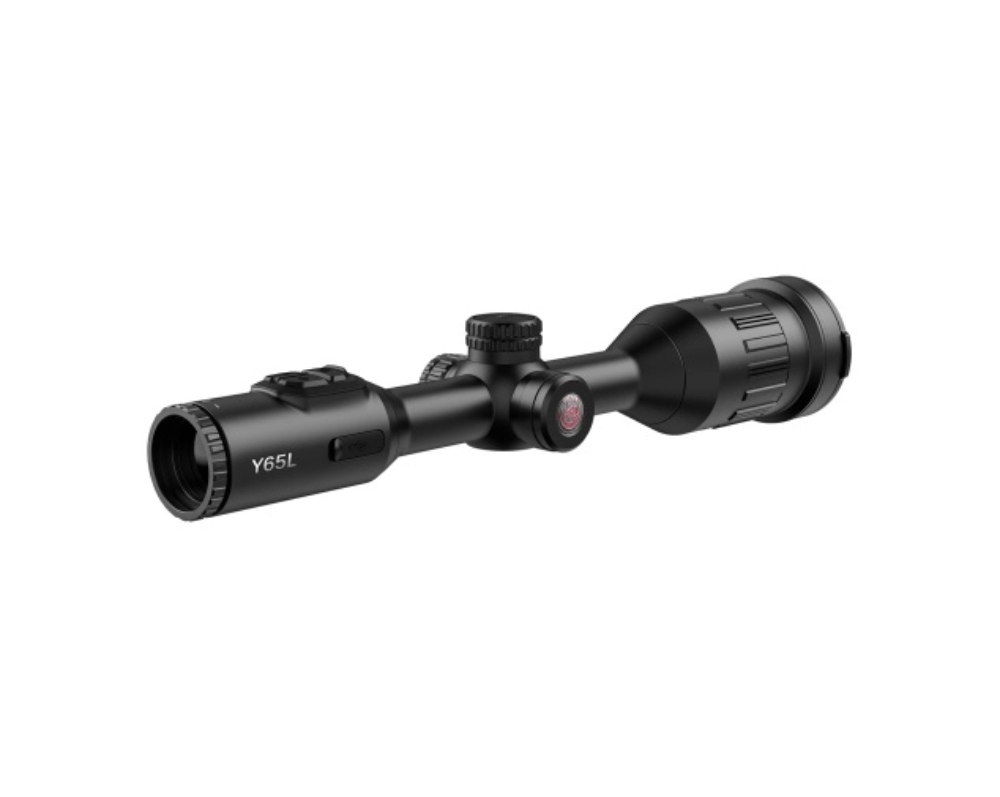
The Thermal Imaging Riflescope – Y65L is the more premium long-range choice in this comparison. Its page lists a 1280 × 1024 sensor, 65 mm lens in the product summary, 3100 m detection range, 2.5× magnification, and a 1.03-inch OLED display with 2560 × 2560 resolution in the detailed specification section. It also lists six palettes, including Black Hot, White Hot, Red Hot, Fusion, Red Monochrome, and Green Monochrome.
That makes it a strong fit if you scan large fields, long ridgelines, open ranch land, or wide farm edges. It is not the smallest option, and that is fine. Some users need detail more than compact size.
Fast Refresh Rate and Smooth Tracking
Refresh rate affects how smooth motion looks. If an animal crosses a field, moves through brush, or steps in and out of cover, a higher refresh rate can make tracking feel more natural.
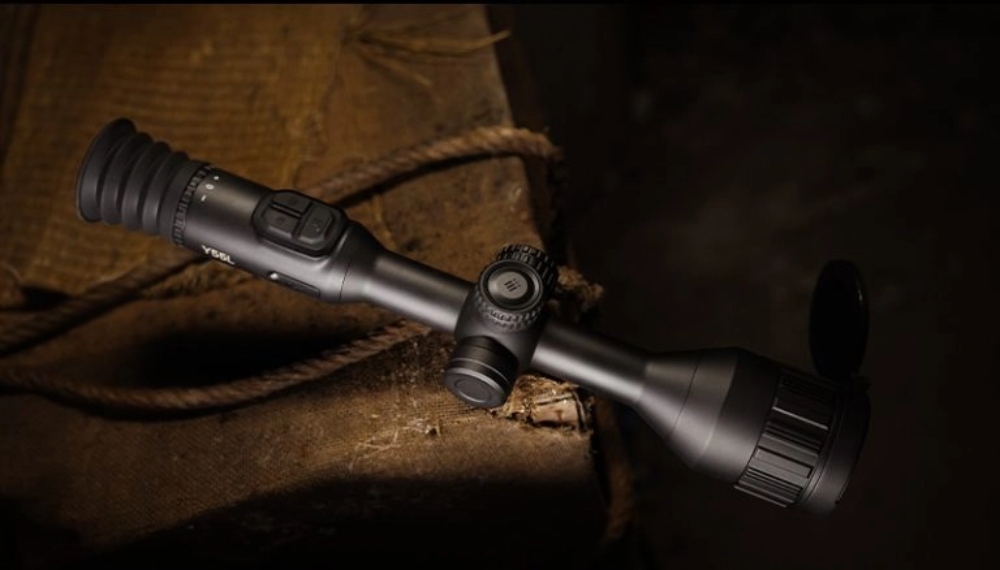
The Thermal imaging scope Y55LRF is built around a different balance. Its product page lists a 640 × 512 sensor, 50 Hz frame rate, <15 mK NETD, 50 mm F1.0 lens, 8.783° × 7.032° field of view, 2.6× magnification, and 2600 m detection range. It also lists a 1000-meter rangefinder and AI ballistic calculation.
That 50 Hz frame rate is useful when you scan moving animals during daylight or shift from one field edge to another. It can feel more fluid, especially when you are not standing perfectly still.
| Specification | Y65L | Y55LRF |
|---|---|---|
| Sensor Resolution | 1280 × 1024 | 640 × 512 |
| Frame Rate | 25 Hz | 50 Hz |
| NETD | <18 mK in summary specs | <15 mK |
| Lens | 65 mm in summary specs | 50 mm |
| Detection Range | 3100 m | 2600 m |
| Built-In Rangefinder | 1000 m, ±1 m listed | 1000 m listed |
| Display | 2560 × 2560, 1.03-inch OLED | 2560 × 2560, 0.39-inch OLED listed in top spec |
| Field Use Fit | Long-range detail and premium image | Balanced day-and-night tracking |
How Should Hunters Use Thermal Scopes During the Day?
Good gear helps, but field habits still matter. Bright sunlight rewards patient scanning. If you sweep too fast, you miss subtle shapes. If you stare only at the hottest objects, you may chase rocks, fence posts, or sun-baked soil.
Think of daytime thermal work as scouting with a heat map. You are looking for patterns that make sense, not just bright spots.
Early Morning Scouting
Early morning is often the cleanest daylight window. The ground is cooler, and animal heat signatures tend to stand out better. If you scout before the sun fully loads the landscape with heat, you can cover more ground with less visual confusion.
This is a good time to scan field edges, creek lines, trails, and shaded entry points. Move slowly. Pause often. Let the image settle. You may spot heat in a brush pocket that looks empty through normal glass.
A high-resolution model is helpful here if your terrain is open. A faster-refresh model is useful if you expect movement. The right choice depends on your hunting ground more than the spec sheet alone.
Shade Lines and Cover Edges
Shade is your friend during daytime thermal use. Animals often hold near cover, and shaded zones usually maintain better contrast than fully sunlit flats. Scan tree lines, brush borders, drainage cuts, and the shadow side of terrain features.
Do not just sweep the middle of an open field and quit. Many useful targets appear near transition areas. The edge of a shadow, the back side of a slope, or a small pocket near brush may show more than the obvious open ground.
This is where a built-in rangefinder becomes practical. If a heat signature appears near cover, you can confirm distance before making any decision. Guessing distance across hot, shimmering ground is not a great plan.
Range Confirmation Before Decisions
In bright sun, distance can be harder to judge. Heat shimmer, open space, and uneven terrain all trick the eye. A rangefinder removes some of that guesswork.
A 1000 m rangefinder, paired with ballistic calculation, is useful when you want a more complete field picture. The product documentation also describes ballistic modes such as low-speed and high-speed remark ballistic, ballistic fitting, and ballistic calculation, with real-time elevation compensation after setup.
This matters because daytime use is often not just about finding heat. You also need to judge range, terrain, movement, and whether the target is worth further visual confirmation. A thermal scope with integrated ranging and ballistic tools can reduce the number of separate steps in that process.
Which Thermal Scope Fits Different Daylight Needs?
You should not choose a thermal scope by one number. Choose it by terrain, scanning distance, target size, and how you actually hunt. A hunter in wide-open country has different needs than a hunter working brushy fields or short lanes.
Y65L for Long-Range Detail
Choose the 1280-class long-range option if you care most about image detail across open ground. Its high sensor resolution, long detection range, large OLED display, onboard recording, hotspot features, and ballistic tools make sense for hunters who scan large areas and want a premium view.
It is especially suitable for wide fields, hill country, ranch roads, long fence lines, and open farm edges. You may not need every high-end feature every time, but when heat contrast gets messy, better resolution gives you more to work with.
The magnesium alloy housing, IP67 protection rating, listed working temperature range from -30°C to 55°C, 64 GB built-in storage, five zeroing profiles, and recoil-activation recording also make it better suited to demanding field use.
Y55LRF for Balanced Day-and-Night Use
Choose the 640-class rangefinder model if you want strong sensitivity, smoother motion, and a practical balance for daytime and night use. Its 50 Hz refresh rate, <15 mK NETD, 50 mm F1.0 lens, 2600 m detection range, and AI image processing make it a strong fit for mixed terrain.
It makes sense for hunters who scan fields, woodlines, trails, and medium-to-long distances without wanting the largest or most premium setup. The built-in 1000-meter rangefinder and ballistic calculation also help if you want fewer separate devices in the field.
For many users, this is the more flexible pick. It is not only about maximum range. It is about seeing clearly enough, moving smoothly enough, and working fast when a target appears for only a few seconds.
Service and Contact for Better Selection
If you are buying for yourself, a team, a shop, or distribution, service matters. A thermal scope is not an impulse gadget. You need product selection, sample confirmation, warranty terms, and support if a quality issue appears.
The company information states that OEM/ODM is supported, exclusive or national-level agency cooperation is available, the ordering process can move from sample delivery to sample confirmation, bulk order, and factory visit, and the whole unit carries a two-year warranty. For quality issues, replacement is offered rather than repair.
Before you choose, ask clear questions: What terrain will you scan? What distance matters most? Do you need faster motion, more detail, built-in ranging, or premium display quality? Good selection starts there.
FAQ
Q: Can You Use Thermal Scopes During the Day?
A: Yes. Thermal scopes read infrared radiation from objects, not visible light. They can work during the day, but bright sunlight can heat the background and reduce contrast. Early morning and late afternoon often give cleaner thermal images.
Q: Why Does Bright Sunlight Make Thermal Images Harder to Read?
A: Sunlight warms rocks, soil, dry grass, tree trunks, and metal objects. When the background becomes warm, the target may not stand out as sharply. A scope with low NETD, good resolution, strong image processing, and a clear display can help.
Q: Should You Choose a Thermal Scope or an Optical Scope for Day Hunting?
A: Use a thermal scope to detect heat signatures and scan cover faster. Use an optical scope when you need natural color, fine visual detail, and traditional sight picture. Many hunters benefit from both, using thermal for detection and optical glass for visual confirmation where legal and practical.
