


Thermal Scope vs Digital Night Vision: Which Works Better for Hunting at Night?
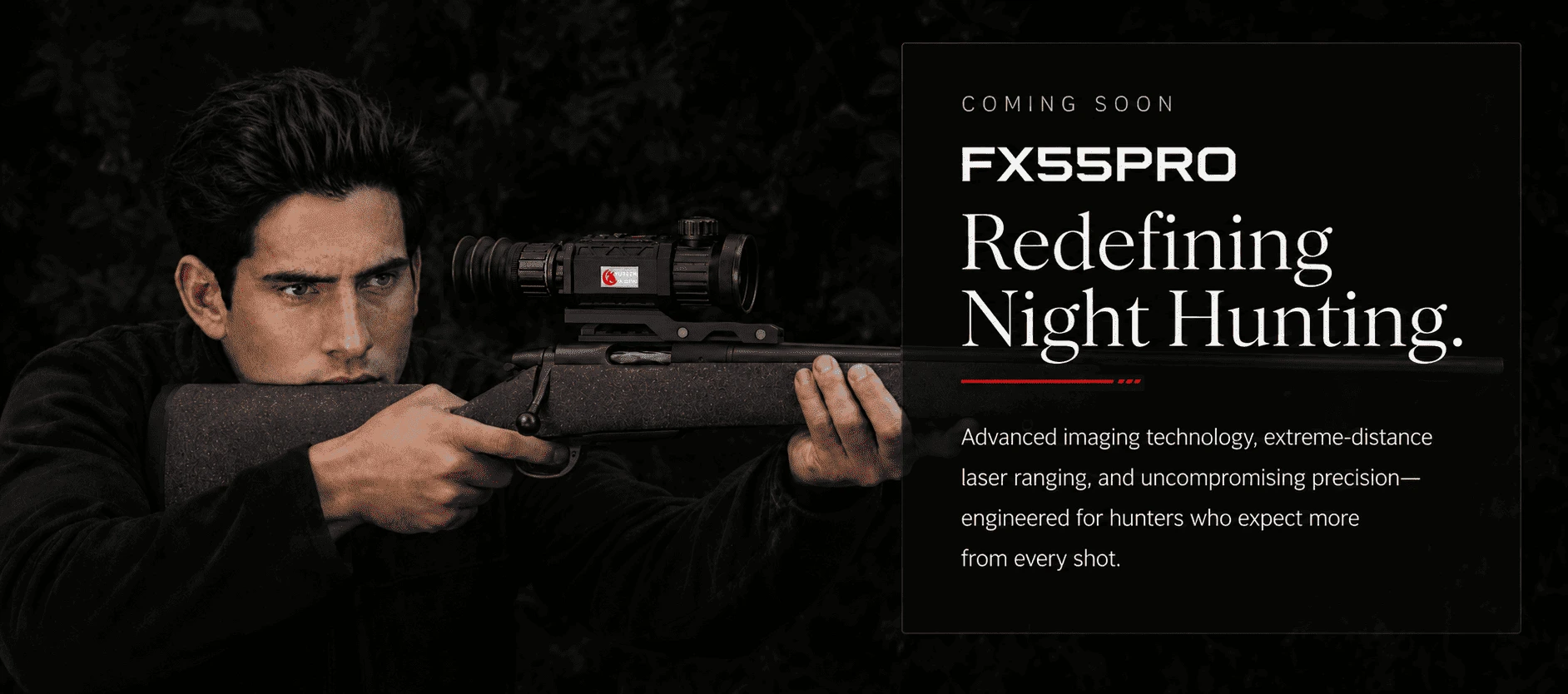
A Thermal Scope is usually the better choice when night hunting depends on fast heat detection, long viewing distance, and target separation from dark cover. Digital night vision still has value when you need a more natural-looking image at shorter range, especially with enough moonlight or infrared fill. The real question is not which device sounds more advanced. It is which one helps you find, judge, and act with less delay after sunset.
Yubeen is aspecialist optical manufacturer focused on thermal imaging sights and optical sights for hunting, law enforcement, and field observation. Its strength sits in smart ballistic systems, clear image processing, OEM/ODM support, and practical service for buyers who need serious night-use optics rather than a simple display device.
How Do Thermal Scope and Digital Night Vision Work Differently?
Heat Detection without Visible Light
A thermal device reads heat energy from objects and turns temperature differences into an image. Animals, people, engines, rocks, wet ground, and trees all show different heat behavior after sunset. This is why thermal imaging can still work when the field looks completely black to the human eye.
For hunting, this matters because the first problem is often detection, not beauty. A deer shape at the far edge of a field may not show rich detail, but a warmer body against cooler brush can stand out quickly.
Light Amplification with More Detail
Digital night vision works more like a light-based camera. It uses available light, and many units rely on infrared illumination when natural light is weak. When conditions are right, it can show fences, tree trunks, ground texture, and animal outline in a familiar way.
The weak point appears when there is little light, heavy shadow, or too much reflection from nearby grass, rain, dust, or branches. The image may look bright but busy, and busy images slow decisions.
Field Choice Based on Detection Goals
If your main goal is to scan wide land and find heat signatures fast, thermal imaging has the edge. If your main goal is close-range navigation or reading terrain texture, digital night vision can still help.
A practical setup for night hunters often starts with one core question: do you need to find the animal first, or do you already know where it is and need more visual detail?
Feature | Thermal Imaging | Digital Night Vision |
Main signal | Heat radiation | Visible or near-infrared light |
Works in complete darkness | Yes | Usually needs ambient light or IR light |
Best use | Fast detection and heat separation | Close-range image detail |
Common weak point | Less natural visual detail | Light glare, shadows, IR reflection |
Field value | Scanning fields, brush edges, open land | Paths, fences, nearby terrain |
What Matters Most in Real Night Hunting Conditions?
Complete Darkness and Low-Light Fields
Night hunting is rarely done in clean conditions. Moonlight changes, low clouds move in, and a field that looked easy before sunset can turn flat and confusing by 10 p.m. Digital night vision can still work, but it often needs light support.
Thermal imaging is less dependent on those light changes. It reads heat contrast, so it can help you spot movement across a dark field or along a wood line without waiting for perfect light.
Brush, Rain, and Background Clutter
Thermal imaging does not see through solid objects, and no serious buyer should believe that claim. But it can help separate exposed warm bodies from cooler surroundings. A head, shoulder line, or leg gap may appear before the whole animal is clear.
Small field detail matters here. Wet weeds, old fence posts, and warm rocks can create false interest. Good practice is to scan, pause, confirm movement, then use magnification or picture-in-picture for a second check.
Strong-Light Glare and Whiteout Risk
Digital night vision can struggle when a light source hits the sensor, such as a vehicle beam, a bright IR reflection, or a close object catching too much illumination. The image can wash out at the wrong time.
Thermal imaging avoids many of those light-related problems because it is not building the image from visible light. That gives it a steadier role when the field has mixed shadows, sudden glare, or uneven light.
Which Thermal Scope Features Help Hunters Find Game Faster?
Detection Range Before Detail Judgment
A common mistake is judging night optics only by how sharp the image looks at close range. In hunting, the first job is often scanning. A device that finds heat at distance may save more time than a device that shows pretty grass at 40 yards.
In the middle of a night hunt, a Thermal Scope earns its place when it reduces empty scanning. Less time spent guessing means more time spent confirming the target, checking what sits behind it, and making a safe choice.
Sensor Sensitivity and Image Processing
Sensor sensitivity matters because small heat differences can decide whether an animal stands out or blends into the background. NETD is one useful number here. A lower NETD value means the unit can read smaller temperature differences.
Image processing also matters after digital zoom. Low-grade zoom can turn a target into blocks. Better processing keeps edges more usable, especially when you zoom in for a final check.
Display, Zoom, and Recording Workflow
The display is not just a comfort feature. A clear screen reduces eye strain during repeated scanning. Picture-in-picture helps because you can keep a wider view while checking a zoomed target area. Recording is also useful for reviewing shots, training, or sharing field results with a team.
Parameter | Y65L Data |
Sensor resolution | 1280 × 1024 |
NETD sensitivity | <18mK |
Lens | 65mm F1.0 |
Base magnification | 2.5x |
Digital zoom | 2.5x / 4x / 8x |
Field of view | 8.78° × 7.03° |
Close focus | 5m |
Listed operating distance | Up to 3,100m |
Display | 1.03-inch OLED |
Display resolution | 2560 × 2560 |
Storage | 64GB |
Housing | IP67 magnesium alloy |
Working temperature | -30°C to +55°C |
Weight | 1,000g |
Battery runtime | 4.5+ hours |
Why Is Y65L a Strong Choice for Night Hunting?
1280×1024 Sensor for Finer Heat Detail
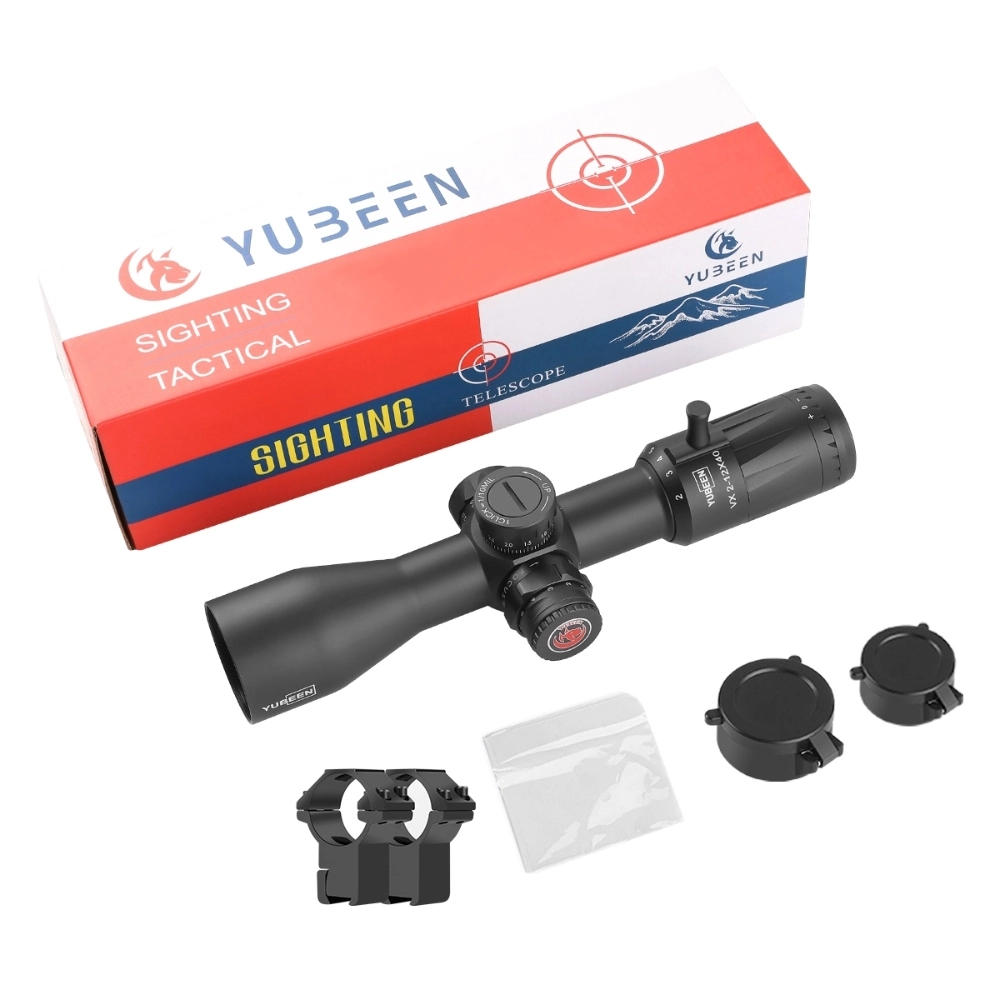
The Y65L | YUBEEN is a serious Thermal Scope choice for hunters and professional buyers who care about long-range observation. Its 1280×1024 uncooled sensor gives it a clear advantage over lower-resolution thermal units when you need finer heat structure.
The <18mK sensitivity is also important. In cool fields, damp valleys, or late-night farmland, small temperature gaps can be the difference between “something moved” and “that is a target worth checking.”
65mm F1.0 Lens for Long-Range Work
The 65mm F1.0 lens fits open land, hill edges, large farms, and long lanes where short-range optics feel limited. With 2.5x base magnification and 8x digital zoom, the unit gives you room to scan first, then check detail.
The 5m close focus is a useful detail that often gets missed. Long-range gear can feel awkward at short distance, but this close focus keeps the unit more flexible around gates, blinds, vehicles, and setup areas.
Ballistic Modes for Easier Precision
Y65L is not only a viewing tool. It includes three ballistic modes: Remark ballistic, ballistic calculation, and ballistic fitting. For buyers who do not want every user to handle complex ballistic inputs by hand, this adds real value.
It also includes picture-in-picture, digital detail enhancement, intelligent hotspot tracking, five zeroing profiles, multiple reticle options, and recoil-activated recording rated at 1000g/0.4ms. Those features support the full hunting flow: detect, check, aim, record, and review.
How Should Buyers Connect Product Choice with Service?
OEM and ODM Cooperation
For distributors, hunting optics sellers, and project buyers, the product is only one part of the decision. Supply stability, customization, and after-sales handling matter just as much. Yubeen supports OEM and ODM cooperation, including agency models for buyers who want long-term market coverage.
That helps when a buyer needs different product tiers for different markets, such as a high-performance model for serious hunters and a more cost-sensitive line for entry buyers.
Sample Confirmation Before Bulk Orders
A sensible buying process starts with samples. Field teams can test image behavior, menu logic, mounting comfort, battery life, and recoil recording before a bulk order. This avoids a common mistake in optics procurement: judging a unit only from a specification sheet.
Yubeen’s process supports sample delivery, sample confirmation, bulk order planning, and deeper factory cooperation. That is practical for buyers who need fewer surprises after shipment.
Warranty, Replacement, and Contact Support
A night hunting optic should be treated as field equipment, not a desk gadget. Buyers should check warranty terms, replacement policy, delivery support, and payment methods before ordering.
Yubeen provides a two-year warranty for the whole unit and supports domestic or international delivery. For product selection, agency cooperation, service questions, or contact support, buyers can discuss samples, technical matching, and after-sales details before scaling the order.
For most night hunting, a Thermal Scope gives the stronger advantage when fast detection matters. Digital night vision still has a place, but Y65L is the better fit when the job needs high-resolution heat imaging, long-range observation, smart ballistic help, and serious field durability.
FAQ
Q: Is a Thermal Scope better than digital night vision for hunting at night?
A: A Thermal Scope is usually better for finding animals fast because it detects heat instead of relying on visible light. Digital night vision can still be useful for close-range terrain detail.
Q: Can Y65L be used for long-range hunting observation?
A: Yes. Y65L uses a 1280×1024 sensor, 65mm F1.0 lens, 2.5x base magnification, 8x digital zoom, and a listed operating distance up to 3,100m, making it suitable for long-range night observation.
Q: What should buyers check before ordering Y65L in bulk?
A: Buyers should test sample units, check image quality in real field conditions, review ballistic mode use, confirm battery needs, discuss OEM or ODM options, and ask about warranty, service, and contact support before bulk purchase.
