Yes. Using a digital night vision scope during the day is possible because its CMOS sensor forms an image from available light reflected by the scene. Daylight usually gives the sensor more light to work with, while dusk, moonlight, and other low-light conditions provide less. An infrared illuminator can improve the image when ambient light is insufficient, but it is not required for every nighttime scene. This answer applies to CMOS-based digital night vision; traditional image-intensifier night vision uses a different imaging technology, so daylight use should follow the instructions for the specific device.
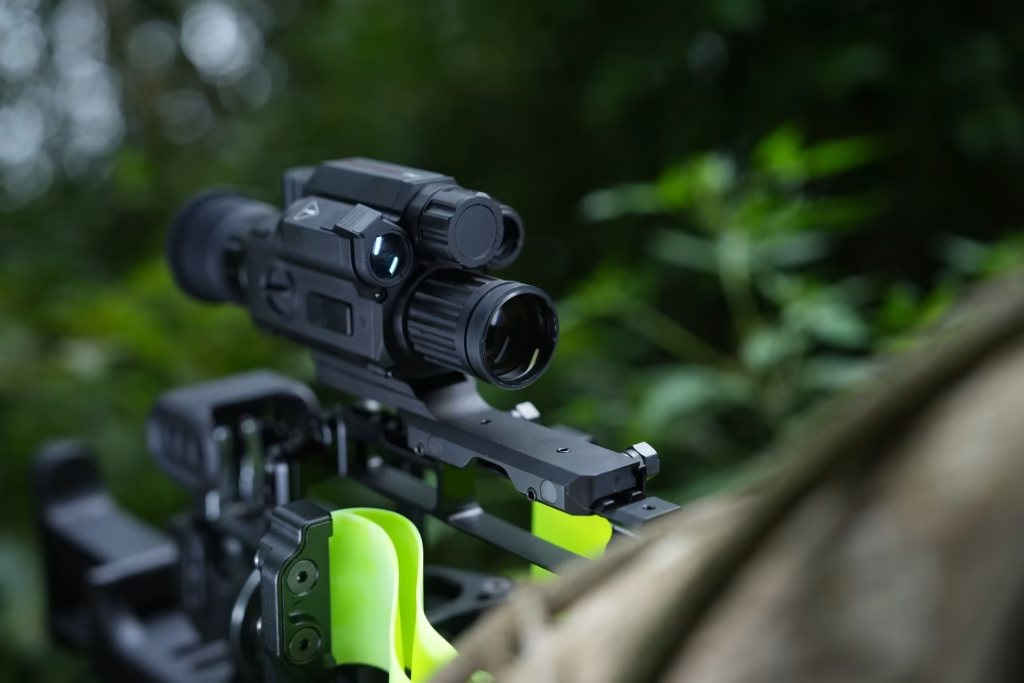
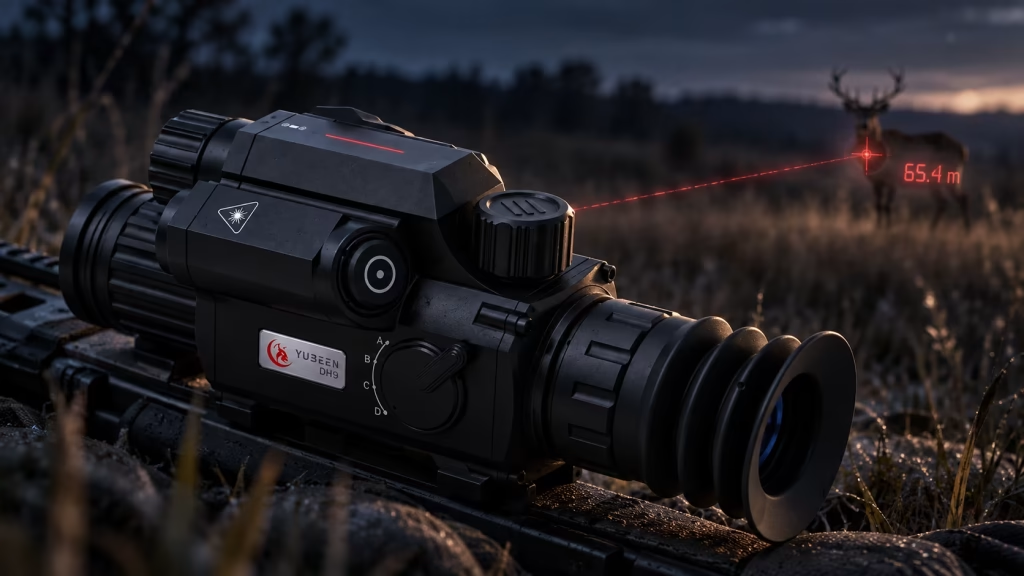
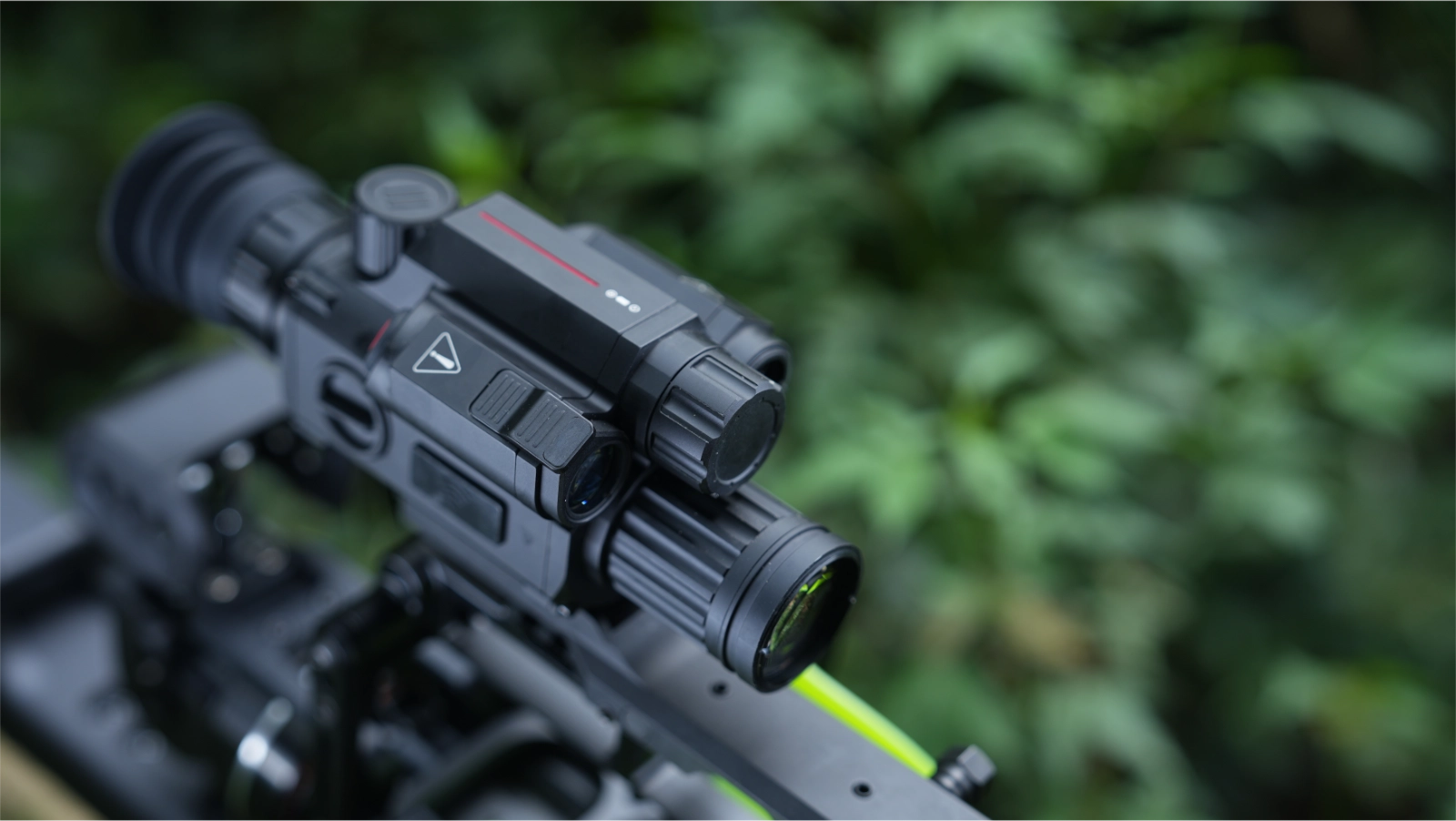
The YUBEEN DH9 is a useful example of this approach. It combines a high-resolution CMOS sensor, an F2.0 objective lens, image processing, a display, and integrated infrared assistance as one day-and-night viewing system. The important question is not whether one mode is permanently “on” or “off,” but how much usable light reaches the sensor and how the complete imaging chain handles it.
Quick answer: A digital day-night scope can work in daylight and in low light. In a moonlit or otherwise usable low-light scene, it may produce an image without IR, although the picture can lose brightness, contrast, or detail. IR is an adjustable aid for darker conditions, not a universal requirement for night viewing.
A digital night vision scope uses available light
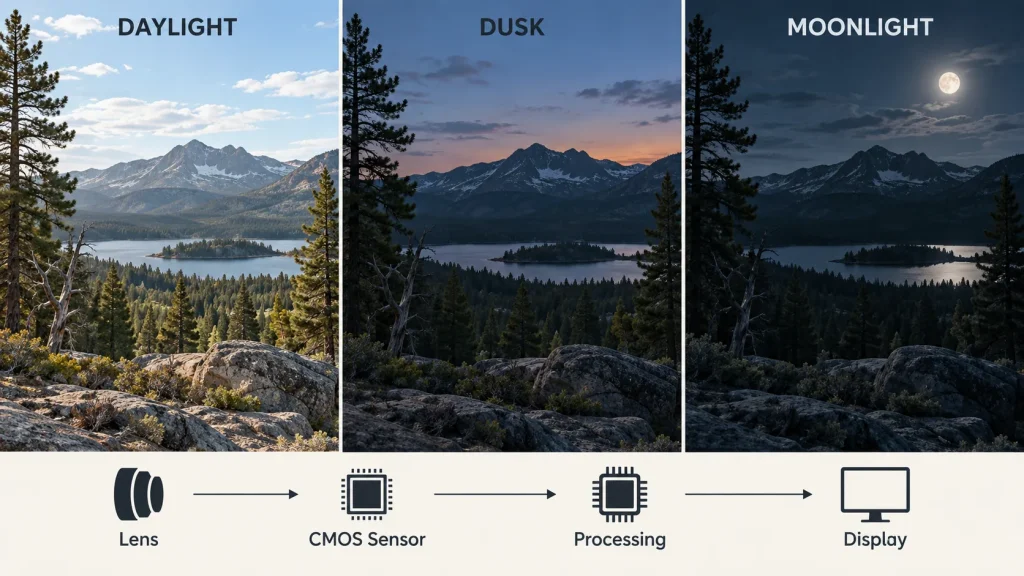
Digital night vision is an electronic imaging process. The objective lens gathers light, the sensor converts that light into image data, software processes the data, and a display presents the result to the user. The sensor does not need the scene to look bright to the eye, but it does need some usable signal.
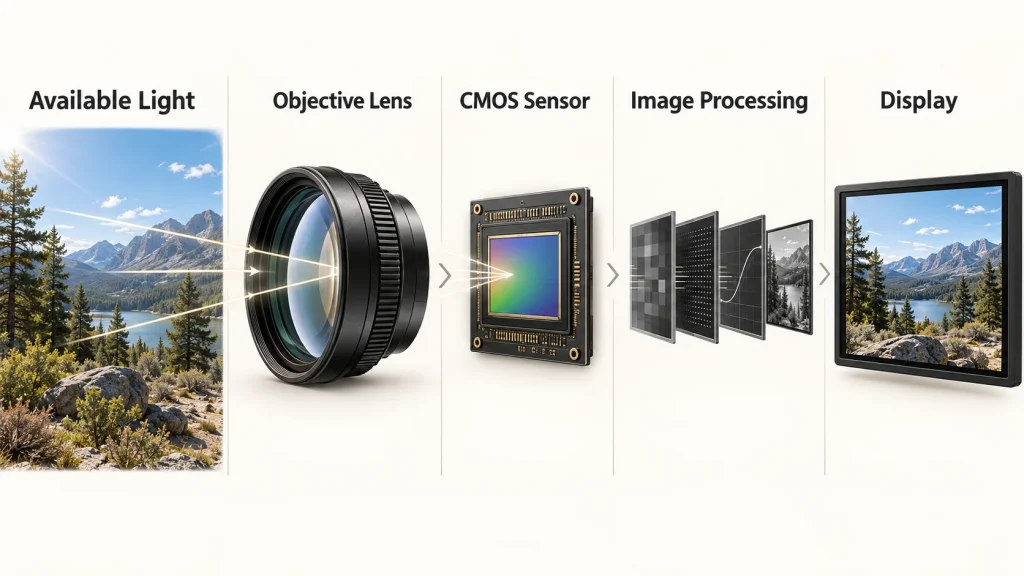
This is why a digital night vision scope can be used during the day without switching to a completely different imaging method. Sunlight and sky light are reflected from objects, surfaces, and vegetation. The sensor receives that reflected light and creates a daytime image. The same basic chain continues after sunset, but the amount and character of the available light change.
The result is not identical at every hour. A bright daytime scene may offer stronger contrast and more visible texture. At dusk, the image may become darker as the available light falls. Under moonlight or other ambient illumination, the device may still form a usable image without additional infrared light. In a darker scene, noise can become more visible and low-contrast details may be harder to separate.
This operating principle also explains why a digital night vision scope should not be judged by one specification alone. The lens, sensor, image-processing system, display, focus, target reflectivity, weather, and user settings all influence what appears on screen.
What changes from daylight to low light
The practical change is the amount of scene information reaching the sensor, not a switch from “day technology” to a completely different imaging method.
| Viewing condition | Available scene light | Role of infrared assistance | Practical expectation |
|---|---|---|---|
| Daylight | Usually abundant reflected light | Often unnecessary | The sensor has more light for texture, edges, and contrast |
| Dusk or dawn | Decreasing or changing light | May help as conditions worsen | Brightness and contrast can change quickly as the scene changes |
| Moonlight or other low light | Usable but limited reflected light | Optional; may improve the image | An image may remain possible without IR, with reduced brightness or detail |
| Very dark conditions | Little usable light reaches the sensor | More useful when permitted and appropriate | The result depends strongly on illumination, target reflectivity, focus, and settings |
The table is a way to think about the imaging chain, not a promise of a fixed viewing distance. A large, reflective target in open conditions may produce a different result from a small, dark target partly hidden by vegetation. Rain, fog, humidity, glare, and physical obstruction can also reduce image quality.
For a broader comparison of light-based night vision and heat-based imaging, see our guide to thermal scope vs night vision.
How the DH9 supports day-night viewing
The DH9 uses a 2560 × 1440 CMOS sensor with a 60 mm F2.0 objective lens as the capture stage of its day-night imaging system. In daylight, the system works with abundant reflected visible light; as ambient light decreases, the same imaging chain continues to operate with less available signal, while infrared assistance can be added when needed. YUBEEN’s Light Pro processing works with the captured signal before the image is presented on the 1920 × 1080 AMOLED display.
Why IR is helpful but not always necessary at night
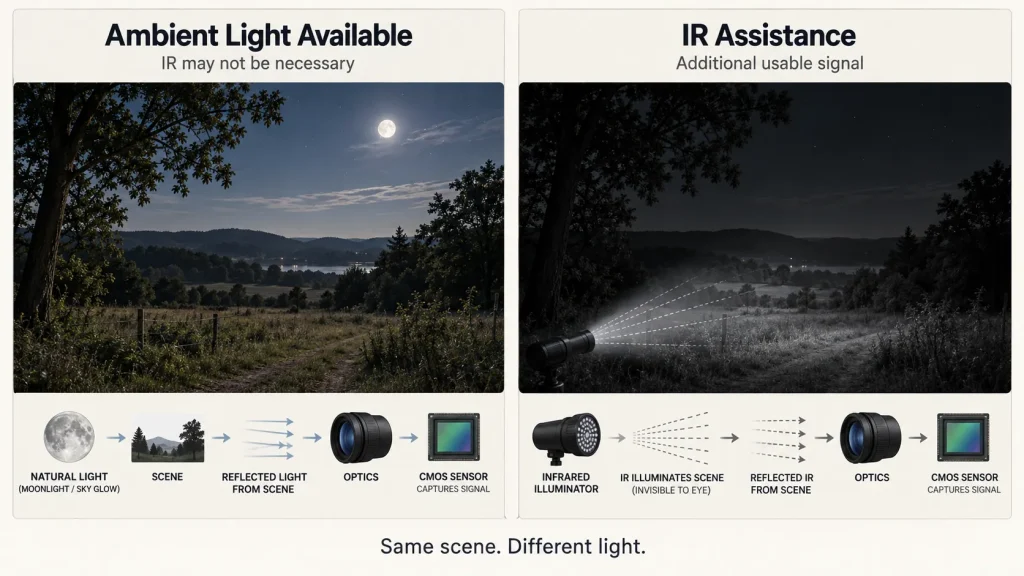
A digital night vision scope does not automatically require IR after sunset. If moonlight, sky glow, or another source of ambient illumination reaches the scene and reflects toward the lens, the sensor may have enough signal to form an image. The picture may be darker or less detailed than it would be with stronger illumination, but the viewing chain can still operate.
When the available signal becomes too weak, an infrared illuminator can add controlled assistance. The illuminator sends infrared energy toward the scene, and surfaces that reflect it can provide additional input for the sensor. This can improve brightness or contrast in a darker area, subject to the target, distance, beam pattern, focus, atmospheric conditions, and device settings.
The DH9 integrates a 3 W laser infrared illuminator into the scope body. The integrated design keeps the assistance close to the main imaging system and avoids treating infrared as an unrelated accessory. It does not change the basic rule: IR is a tool for improving low-light imaging when needed, not a condition that must be met before every nighttime image can exist.
The DH9 also allows the IR beam to be adjusted between broader and more concentrated illumination, giving the user a practical way to match the assistance to different viewing conditions.
A brief DH9 product note
The DH9 also includes up to 2.3× lossless digital zoom, laser rangefinding, Wi-Fi and recording functions. These features support operation and workflow, but they do not change the basic day-night imaging principle discussed here.
What to check when choosing a digital day-night scope
When comparing a digital night vision scope, look at the relationship between the parts rather than selecting one large number.
- Check the input chain. Ask how the sensor, objective lens, and image processing are specified together. A high sensor count does not remove the need for usable light, focus, and target contrast.
- Check low-light assistance. Determine whether IR is integrated, adjustable, or external, and whether the design lets the user choose when to use it. Night viewing should not be described as dependent on IR in every scene.
- Check the display separately. Sensor resolution and display resolution describe different stages. Both matter, but they should not be combined into one simplified claim.
- Check magnification wording. Separate optical or base magnification from digital zoom, and look for the exact range in which a manufacturer uses terms such as “lossless.”
- Check field conditions. Treat brightness, contrast, focus, weather, target reflectivity, and obstruction as part of the expected result. Avoid judging a scope by a laboratory-style number without its conditions.
- Check supporting functions. Rangefinding, recording, Wi-Fi, and controls can improve the workflow, but each function has a different job and may affect power use.
For technical background and current product context, readers can review the YUBEEN product range and About Yubeen. The DH9 is a current product example built around digital day-and-night viewing rather than a single night-only operating mode.
FAQ
Can you use a digital night vision scope during the day?
Yes. A CMOS-based digital night vision scope can use daylight and reflected scene light to form an image. Daylight often gives the sensor more signal, but the device remains the same digital imaging system after sunset. Image quality changes with available light, contrast, focus, target reflectivity, and settings.
Must IR be turned on for night viewing?
No. In moonlight or another usable low-light condition, a digital night vision scope may form an image without IR. The image may be darker or less detailed. IR is useful when the available signal is too weak, but it is an aid rather than a universal requirement for nighttime operation.
Does a 3 W IR illuminator guarantee a clear image?
No. Power is only one part of the result. Beam pattern, target reflectivity, distance, focus, atmosphere, obstruction, sensor performance, and display settings also matter. The DH9’s integrated 3 W laser IR illuminator is designed to provide adjustable low-light assistance, not to guarantee the same image in every scene.
Does the same imaging system work in both daylight and low light?
Yes. The DH9 uses the same CMOS-based imaging chain across changing light conditions. What changes is the amount of usable scene light and whether infrared assistance is helpful.
What affects image quality as daylight fades?
Available light, target contrast and reflectivity, focus, weather, device settings, and the use of infrared assistance can all affect the displayed image.
Conclusion
A digital night vision scope can be used during the day because it forms an electronic image from available and reflected light. At night, it may continue to work under moonlight or other low-light conditions without IR, although reduced signal can lower brightness, contrast, or visible detail. When the scene becomes too dark, an integrated infrared illuminator can provide additional assistance.
The DH9 illustrates this balance with a 2560 × 1440 CMOS sensor, 60 mm F2.0 objective lens, Light Pro processing, 1920 × 1080 AMOLED display, and integrated 3 W laser IR assistance. Its value is in how these parts work together. For current specifications or additional product information, contact YUBEEN.