


The Science of Detection: How Thermal Imaging Scopes Work in Extreme Weather
Step into the exciting world of outdoor watching, where things you can’t see turn into something perfectly obvious. If you’ve ever felt annoyed by thick fog, heavy rain, or the total blackness of a night without moonlight, you know the problems with regular lenses. But suppose there was a method to cut through these weather barriers, to view the surroundings not by bounced light, but by the actual energy things give off? This is the area of thermal imaging, a method that has changed how we find and watch things in many areas, from saving lives in rescues to managing animals and, naturally, responsible hunting.
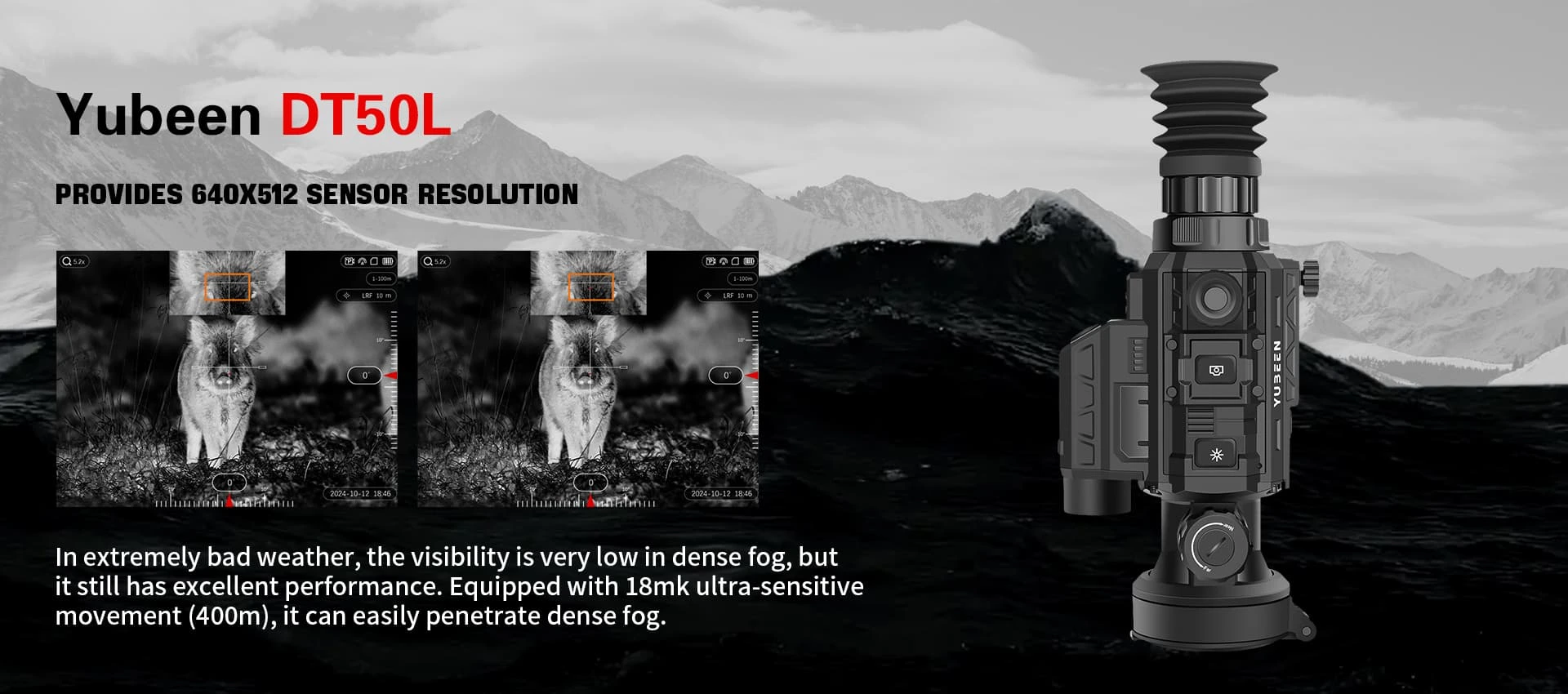
For many years, thermal tech stayed mainly for the military and expert users. Its tricky nature and high price kept it away from regular hobbyists. Yet, a steady change has been happening, led by firms focused on bringing this strong feature to everyone without losing quality. Picture a gadget so well-made that it can tell apart the heat from a far-off animal and the area around it, even when the weather gets really tough. Picture the sure feeling of having gear that won’t let you down in the hardest situations. This is what companies like Yubeen offer, as they have carefully built top-notch thermal tools for people who care about details. Their dedication to mixing the latest science with strong, easy-to-use builds means that no matter if you’re following animals, protecting land, or just checking out the hidden side of nature, you have a device that changes how you look at things. With their items, you’re not simply getting tech; you’re putting money into a fresh way to observe, one that turns problems into chances.
Beyond the Visible Spectrum: The Invisible World Revealed
You usually see the world using visible light. Your eyes, binoculars, and even basic night vision tools all depend on light particles jumping off items and going into a lens. But what occurs when those particles get spread out by fog, soaked up by rain, or just missing in full dark? That’s when things get dim for you, or even totally black.
Thermal imaging runs on a completely different idea. Rather than light, it picks up heat. Every item with a temperature over absolute zero (which covers almost everything around you) gives out infrared rays. This radiation belongs to the electromagnetic spectrum, much like visible light, but it comes with a way longer wavelength and stays hidden from human eyes. Your thermal scope has a very responsive sensor that grabs these sent-out infrared waves. Then it handles this info, turning small temperature changes into a picture on a screen. Hotter items often look brighter, while colder spots look darker, making a clear thermal picture of what’s nearby. This basic change from finding light to finding heat explains exactly why these tools can work in situations that make regular lenses pointless.
The Physics of “Seeing” Heat: How Your Scope Works its Magic
To really value the strength you hold, it’s good to look a bit more into the science. Your thermal scope doesn’t just spot heat; it carefully checks and charts it. At the center of this job is an uncooled focal plane array (FPA) sensor. This array holds thousands of tiny detectors, each working like a small temperature measurer. When infrared radiation from items in the view hits these detectors, it causes a shift in their electrical resistance. This shift gets measured and turned into an electrical signal.
The key point is in the wavelength. Visible light takes up a small part of the electromagnetic spectrum (around 0.4 to 0.7 micrometers). Infrared, especially the Long-Wave Infrared (LWIR) band that most thermal scopes use (7 to 14 micrometers), has much longer waves. These longer waves get scattered and soaked up less by small bits like water drops in fog or rain. Imagine it like sea waves: big waves can pass through a bunch of floating markers with little trouble, while tiny waves get bounced around and taken in. This “wavelength benefit” forms the main reason your thermal imager can push through air blocks much better than any visible-light tool. It’s not only about spotting heat; it’s about gathering more of the proper type of energy to make a sharp picture.
Atmospheric Challenges: Conquering Fog, Rain, and Snow
You’ve felt it: that annoying time when heavy fog moves in, or a quick storm makes everything around you fuzzy. For a standard optical tool, this spells the end. For a solid thermal imager, it’s simply business as usual.
a. Fog and Humidity: Piercing the Veil
Fog is made of tons of small water drops hanging in the air. These drops are great at bouncing and sending back visible light, which is why your car lights just make a bright glow in foggy weather. However, the longer wavelengths of infrared radiation that your thermal scope uses get affected much less by these tiny barriers. While some energy loss happens in very thick fog, a nicely built thermal imager can still notice big temperature differences, letting you spot warm items that would stay hidden from plain sight. The main thing is how well the device can block out the leftover air “noise” and zero in on the heat signs.
b. Rain: Shedding the Downpour
Strong rain brings two problems. First, the raindrops can take in some infrared energy, just like they take in visible light. Second, and maybe more key, ongoing heavy rain can start to even out the surface heat of items. As drops hit an object, they pass on their own temperature, which can lessen the heat difference between a warm goal and what’s around it. People call this “thermal washout.”
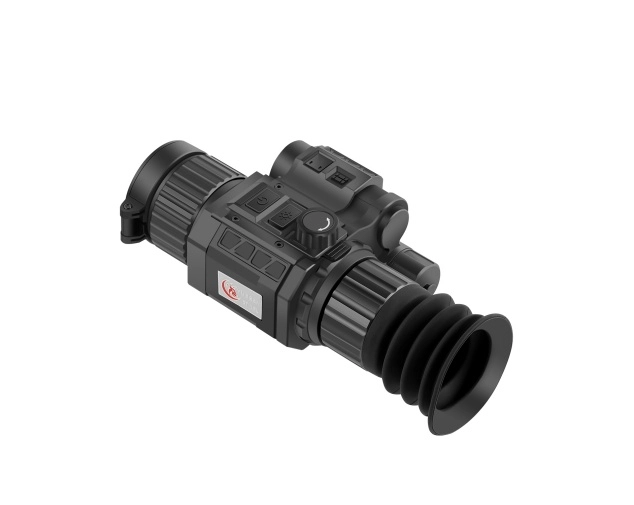
Still, top thermal scopes get made to fight this. Their strong heat pickup (low NETD, which we’ll cover soon) lets them catch even the smallest temperature changes. Plus, smart image handling methods boost contrast and make edges clearer, so you can tell a warm body from a wet background, even if the heat gap is small. With a tough device like the Thermal Imaging Rifle Scope – ST35LRF, you stay ready to keep track of things and find targets even when it starts pouring.
c. Snow: Mastering the Winter Whiteout
Snow creates special setups. New, dry snow holds heat well and stays pretty cold, giving a clear heat difference against warmer things. But falling snow, particularly wet kinds, can bring its own issues, much like rain. Yet once more, the built-in traits of infrared radiation let your thermal scope do a great job. The heat energy from a warm creature will keep sending out, and your scope will grab it, even if the ground is covered in snow and the air has flakes flying. The biggest worry isn’t the snow by itself, but making sure your device can run in very cold air and wetness, which is a sign of well-made thermal imagers.
Key Performance Metrics for Extreme Weather: What Matters Most
When you check a thermal scope for bad weather, some specs stand out as very important signs of how it works. These aren’t mere figures; they show the main building work that lets your device do well when others don’t.
NETD (Noise Equivalent Temperature Difference): The Ultimate Sensitivity Test
NETD might be the top measure for thermal imagers, particularly in hard settings. It shows the tiniest temperature gap your scope can find. Given in millikelvins (mK), a smaller NETD number means better heat pickup. For example, a scope with NETD of <25mK can spot finer temperature shifts than one with <50mK.
Why does this count so much for rough weather? In fog, rain, or spots with thick plants, the heat gap between a warm item and its backdrop can be slight. Air wetness can a bit balance temperatures, or heavy cover can partly hide the heat mark. A very responsive sensor, with a low NETD, can grab these small details, giving you a sharper, easier-to-see picture of your goal against what looks like a flat, cold, or damp setting. This is where high-end devices really set themselves apart, making sure you catch important heat facts.
Germanium Optics: The Window to the Infrared World
The lens on your thermal scope isn’t from normal glass. Glass stops infrared radiation. Instead, good thermal imagers use special stuff like Germanium for their main lenses. Germanium lets long-wave infrared radiation pass through, so the most thermal energy gets to the sensor.
The level of these optics right away affects picture sharpness and energy collection (or better said, “heat collection”). In spots where every piece of heat info matters, a carefully shaped and covered Germanium lens makes sure the sensor gets the cleanest thermal input, cutting down twists and boosting the chance for a clear, strong-contrast picture. You see such top optics in scopes like the Thermal imaging rifle scope—DT50LRF, built for tough uses where sharpness and distance count the most.
Resolution and Pixel Pitch: Detail in the Distance
Like a digital camera, your thermal scope’s sensor has a certain resolution (e.g., 384×288, 640×480). Greater resolution means more pixels, which leads to more detailed pictures. Pixel pitch means the size of each single detector part on the sensor (e.g., 17 $\mu m$, 12 $\mu m$). A tinier pixel pitch on the same-sized sensor allows for higher resolution or a smaller sensor body for the same resolution.
In tough air conditions, where sharpness might naturally drop, higher resolution and smaller pixel pitch grow even more vital. They let the picture handling system pull more details from the heat data at hand, aiding to outline the form and traits of a goal even when the full contrast feels low. When you’re working to spot a goal through a foggy area, those added pixels can change everything for correct spotting.
Engineering for the Elements: Your Reliable Partner in the Field
The real check for any outside equipment is how it acts when the weather turns really bad. This is where special building steps matter, making sure your thermal imager isn’t just quick to respond, but also sturdy and dependable.
Robust Construction: Built to Endure
Your thermal scope has to be more than an electronic wonder; it needs to stand strong against the weather. Seek traits like high IP (Ingress Protection) levels, such as IP67. This means the device keeps out dust and can handle being under water up to 1 meter for 30 minutes. Such strong protection is totally needed for working in big rain, snow, or even if it falls into shallow water by mistake. Also, the outer case should come from lasting, hit-proof materials, able to ignore knocks, scratches, and the big push-back force if it’s on a gun.
Integrated Laser Rangefinders (LRF): Precision in the Fog
While thermal scopes shine at finding things, judging distance right in blocked views can still be hard. That’s why lots of new models now add a Laser Rangefinder (LRF). This lets you exactly measure the distance to your goal with one button push, even when seeing is bad. The LRF sends out a laser burst and times how long it takes to come back, giving a spot-on range reading that’s key for smart choices, whether for aiming a shot or just watching. This built-in accuracy gives a big edge when weather blocks normal guessing.
Beyond the Hardware: The “Brain” of Your Scope
While sensor quickness and lens quality form the base, the basic data the sensor gathers needs smart handling to turn into the lively picture you view. This is where advanced programs and screen tech take a big role.
Image Enhancement Algorithms: Refining the View
Today’s thermal scopes use clever digital signal processing (DSP) methods. These methods keep working quietly to improve the thermal picture right away. They can cut down digital fuzz, make edges stand out more, boost full contrast, and even fix small air issues. So even if the basic heat data gets a bit worn by fog or rain, the handling system tries to show you the sharpest picture possible, letting you notice small points that might get missed. It’s like the gap between a fuzzy photo and one fixed up by a pro.
High-Resolution Displays: Presenting the Perfect Picture
The level of the picture you see depends fully on the screen it’s shown on. High-detail OLED (Organic Light-Emitting Diode) screens get chosen in top thermal scopes. OLEDs give amazing contrast levels, real dark areas, and bright colors (or gray tones/color choices, based on what you like). This better screen tech makes sure the carefully handled thermal picture gets shown with the most sharpness and detail to your eyes, stopping any loss of the earned heat info before you notice it.
Conclusion: Confidence in Every Condition
You now have a better sense of the detailed science and careful building that let modern thermal imaging scopes work so well in rough weather. It’s not some trick; it’s the smart use of physics, from picking up hidden infrared wavelengths to handling tiny temperature gaps and showing them with great sharpness. When you pick a strong thermal imager, you’re not just getting a tool; you’re spending on top-level awareness of your surroundings and the sure feeling to work well, no matter what nature sends. The times of being held back by dark, fog, or rain have ended. The hidden world now waits for you to check it out.
Frequently Asked Questions
Q: Can thermal imaging scopes really see through complete darkness?
A: Yes, absolutely. Thermal imaging detects heat emitted by objects, not reflected light. Therefore, it works just as effectively in pitch blackness as it does in broad daylight, as long as there’s a temperature difference between the object and its surroundings.
Q: Will a thermal scope help me see through dense bushes or thick foliage?
A: To some extent, yes, but it’s not truly “seeing through” solid objects. Thermal radiation can penetrate light foliage, thin branches, and even some non-metallic materials better than visible light. However, dense foliage or thick cover will obscure the thermal signature. The scope will show the heat signature of the leaves or branches that are directly in its line of sight, but it can often detect the subtle heat emanating around or through gaps in lighter cover, helping to reveal what might be hidden.
Q: Do thermal scopes work well in extremely cold weather?
A: Yes, they do. In fact, extremely cold weather can sometimes enhance thermal contrast, as warm objects stand out even more against a frigid background. The primary concern in cold weather is the device’s battery life and its physical construction to withstand freezing temperatures and moisture. Quality thermal scopes are designed with robust housings and electronics to perform reliably in a wide range of environmental temperatures.
