


The Physics of FPA: Understanding Microbolometer Resolution and Refresh Rate in Thermal Imaging Scopes
I. Introduction: Seeing the Unseen Heat
Thermal imaging has greatly altered the way people approach hunting, surveillance, and tactical tasks. You do not have to worry about daylight or good weather anymore. You can move across land and pick out targets by their heat patterns, rather than relying on light you can see. This offers a real benefit when things get hard to view. In cases like thick fog, complete night, or thick plant cover, a thermal scope gives you better knowledge of what is around you.
The main part of this tech is the Focal Plane Array (FPA), which is a flat setup of sensors that grabs infrared rays coming from things. The FPA is more than just a basic camera part. It is a detailed setup of microbolometers. These little heat catchers change heat power into electric signals. In turn, they make the picture you use in your scope.
Two main factors set the level of quality and quick response in your thermal imaging gear: resolution and refresh rate. Resolution sets how much fine point you notice. Refresh rate sets how even the view flows, above all when targets shift position.
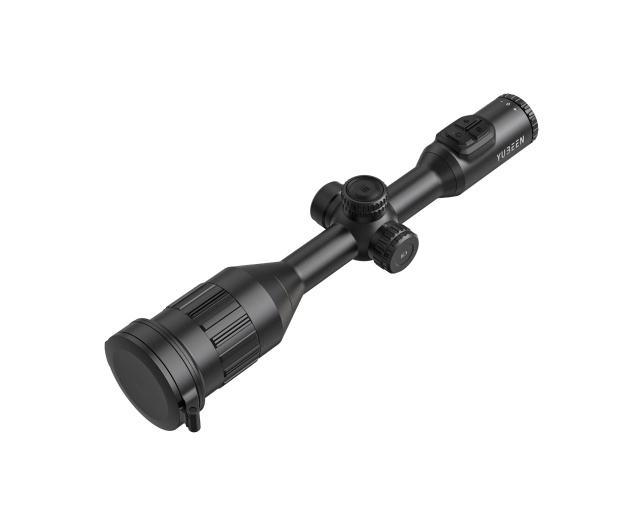
Yubeen Optical Instrument Co., Ltd. stands as a leader in this area. It acts as a focused maker that has a new research and development spot and making site in Zhejiang, China. The company brings out accurate thermal imaging riflescopes made to fit everyday use in the outdoors. Their items show a skilled mix of strong-resolution sensors, very sharp detectors, and wise ballistic setups. All this makes them a top option no matter if you work in action-based places or look over far areas while hunting. Check out more details at Yubeen.
To understand why thermal imaging matters so much, think about how it works in real life. For example, during a night hunt, you might spot a deer from far away just by its body warmth. This tech cuts through smoke or rain that would block normal sights. Many users say it changes their whole experience, letting them stay safe and effective longer. Yubeen focuses on making sure their tools handle tough spots well, with designs that last through rough use.
II. The Science of the Microbolometer and Resolution
A. What is a Microbolometer?
The base of your thermal imaging scope comes from the microbolometer, which is an uncooled heat sensor piece that shifts its electric resistance as it takes in infrared radiation. Many thousands of these pieces put together make the FPA. Each spot on your screen matches up with a microbolometer. It turns changes in heat into a picture on a screen.
People measure how sharp it is with NETD (Noise Equivalent Temperature Difference). This tells the smallest heat gap that your scope can pick up. When NETD is lower, you get better details in heat views. This is key for sorting out items that have almost the same heat, such as creatures placed behind leaves or mixed in mist.
The equivalent temperature difference (NETD) indicates how small the thermal difference can be detected by the device in the environment. The smaller the NETD level, the more sensitive the device is.
Microbolometers work without needing cold setups, which makes them easy to use in scopes. They react fast to heat changes, helping you see small shifts in temperature right away. This tech has grown over years, with better materials that cut down on noise and boost clearness. In practice, it means you can tell a warm rock from a living thing more easily.
B. Resolution: The Clarity of Thermal Imagery
Resolution points to the amount of pixels placed on the sensor setup, usually 384×288 or 640×512. When resolution is higher, it lets you have pictures with more fine points. This helps you know and name targets better, not just find them.
A 640×512 sensor gives way more info spots than 384×288 does. As a result, you get clearer pictures and can spot things from farther away. This is not only about how nice it looks. It really shapes the choices you make while out working.
640 resolution enhances image clarity and target acquisition. When paired with high sensitivity (NETD <18mK) and advanced image algorithms, this resolution allows precise spotting even through dense fog or heavy brush.
Resolution affects everything from close-up views to far-off looks. With more pixels, edges stand out sharper, and shapes become easier to make out. Users often note that in low light or bad weather, higher resolution turns a blurry shape into a clear form you can trust. This builds confidence in your gear for serious tasks.
C. Resolution in Action: Product Applications
If you care about accuracy over long distances, keep the Y65L in mind. It has a rare 1280×1024 sensor along with a NETD less than 15mK. This brings the best clear picture quality you can find now. When you add a 65mm lens and a smart AI ballistic calculator, the unit fits for high-level actions up to 3,100 meters away.
For people who want a good match between clear views and saving money, think about the ST35LRF. It features a 384×288 uncooled FPA with NETD less than 35mK, making it ideal for mid-range applications where precision still matters but budget is a factor.
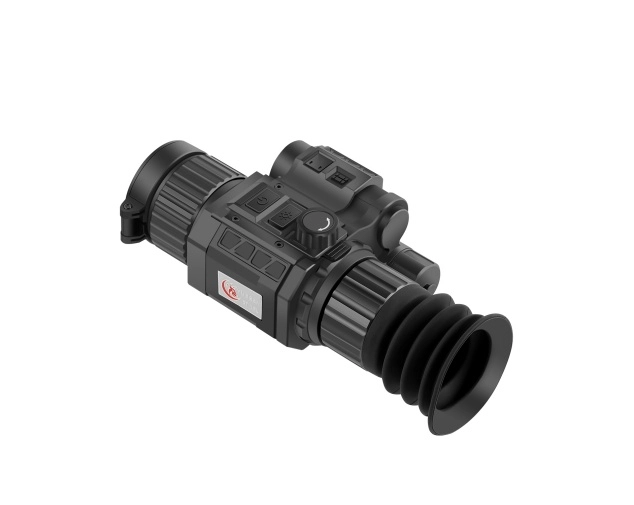
The Y65L stands out because its sensor packs in so many pixels, which helps in spotting tiny details at great ranges. Hunters use it for big game tracking, while tactical teams rely on it for secure operations. On the other hand, the ST35LRF suits beginners or those on tighter budgets, offering solid performance without extra cost. Both show how Yubeen tunes resolution to fit different needs.
III. The Importance of Refresh Rate (The Smoothness of Motion)
A. What Refresh Rate Means for You
Refresh rate means how many times the picture updates in one second, counted in Hertz (Hz). It might seem like tech talk, but it affects real use when you follow targets that move. If the refresh rate is low, under 30Hz, it can make pictures fuzzy or slow as targets cross your sight fast.
By comparison, when refresh rates go higher, like 50Hz or above, they give quick real-time views. You do not just see where the target sat before. You watch where it goes next.
Equipped with a 50Hz high-frequency refresh, the screen noise is removed to make the image quality more delicate.
This makes all the difference when you’re following fast-moving game like hogs or coyotes in open terrain.
Refresh rate ties into how natural the motion feels. In fast action, a high rate keeps everything steady, so you do not lose track. This proves useful in fields like wildlife control or border watch, where speed counts. Lower rates might work for still scenes, but they fall short when things pick up pace.
B. Real-Time Target Tracking: Choosing High-Performance Models
A 50Hz refresh rate isn’t just ideal—it’s essential for dynamic environments. The DT50LRF integrates a 640×512 sensor with a 50Hz frame rate and NETD <18mK, ensuring both clarity and fluid motion as you engage from distances up to 2,600 meters.
Similarly, the ST35LRF also delivers a steady 50Hz refresh rate with a 384×288 sensor configuration. Its compact form factor and intelligent ballistic system make it particularly effective for hunters who need agility without sacrificing performance.
The DT50LRF shines in quick scenarios because its frame rate matches the sensor strength, creating smooth follows. Users praise it for night drives or pursuits in woods. The ST35LRF adds the same smooth flow in a smaller package, perfect for portable hunts. Together, they highlight Yubeen’s push for balanced speed and detail.
IV. Integration and Performance: The Complete Package
Resolution and refresh rate are foundational, but your scope’s full performance depends on how its components work together.
The quality of optics—specifically germanium lenses—and their size determines how effectively thermal energy is collected and focused onto the FPA. Larger lenses like the Y65L’s 65mm option offer wider fields of view and better long-range performance.
Beyond optics, intelligent features like Laser Range Finders (LRF) elevate functionality. Models like ST35LRF and DT50LRF integrate LRF modules capable of accurate measurement up to 1,000 meters. This isn’t just a distance tool—it’s part of a smart ballistic system that calculates real-time impact points based on angle, elevation, and environmental conditions.
Image processing software also plays a pivotal role. Adopting NETD<18mk ultra-high sensitivity detectors combined with exclusive AI digital interpolation algorithms solves image pixelation issues during electronic zoom. This means you maintain clarity even when zoomed deep into your target area.
When all parts link up, the scope becomes more than its pieces. For instance, good lenses pull in more heat, feeding the sensor better data. The LRF adds exact distance info, which the software uses to adjust aims on the spot. This setup saves time and boosts hits in real use. Yubeen tests these combos to ensure they hold up in dust, wet, or cold, giving users peace of mind.
Moreover, the ballistic tools consider wind or drop, making shots more true. In group operations, this means everyone shares reliable reads. Overall, integration turns basic tech into a full system that adapts to your needs.
V. Conclusion: Choosing Your Thermal Advantage
To make an informed decision in thermal imaging, you must consider both resolution for image detail and refresh rate for motion fidelity. A low-resolution scope may detect heat but struggle with identification; likewise, high-resolution without fluid refresh will falter during pursuit.
Whether you’re seeking peak clarity for long-range sniping with the Y65L, or agile mid-range adaptability with models like ST35LRF and DT50LRF, each product represents deliberate engineering choices tailored for field excellence.
Picking the right one starts with your main goals. If distance rules, go for high resolution like in the Y65L. For quick moves, stress refresh rate in the others. Yubeen offers options that fit budgets and uses, from hobby hunts to pro work. In the end, the best choice boosts your skills and safety out there.
Users often share stories of how these scopes turned tough nights into successes. With solid build and smart features, they last through seasons. Take time to match specs to your setup, and you will gain a real edge.
VI. Yubeen Service and Support
The whole machine comes with a two-year warranty. It means every device comes with two-year warranty coverage. If there’s a quality issue within this period, they replace rather than repair—ensuring reliability where it matters most.
You can reach out to their experienced sales or technical teams via phone (+86 13058999702) or email for tailored advice on product selection. For full product listings and specifications, visit their official site at Yubeen.
Yubeen’s support goes further with quick replies and custom tips. They guide on setup or fixes, helping you get the most from your gear. This level of care builds trust, as clients know help is close. From order to use, their team keeps things smooth.
FAQ
Q: Why does resolution matter so much in thermal imaging?
A: Resolution affects not only how clearly you see an object but also whether you can identify it at distance or merely detect its presence. More pixels mean better target recognition.
Q: How does refresh rate impact field performance?
A: A higher refresh rate ensures smoother motion tracking. This is critical when engaging fast-moving targets—lower rates may cause lag or image stutter.
Q: Can I use thermal scopes in dense fog or poor weather?
A: Yes. Devices with low NETD pick up small heat changes that light-based tools miss. This lets you see through fog, rain, or smoke where normal views fail. For example, in heavy mist, you can still spot warm bodies from afar. Yubeen’s scopes use strong sensors to cut noise and keep pictures steady. They work well at dawn or in storms, giving clear sights when others cannot. Hunters and teams use them year-round in woods, fields, or bad spots without lights or clear air. Overall, this makes thermal tools reliable for all kinds of weather and times.
