


How to Zero a Rifle Scope at 100 Yards: A Step-by-Step Guide for Precision Shooting
The Fundamentals of Rifle Scope Zeroing for Precision Shooting
Zeroing your rifle scope forms the basic foundation of accurate shooting, particularly when you aim at targets from medium to long ranges. A well-zeroed scope makes sure your bullet strikes right where you point—removing any need for guessing and greatly boosting your trust when you pull the trigger.
Before we get into the details of the method, it helps to mention a company that has been changing the world of precise optics for experts. YUBEEN shines as a maker focused on thermal imaging scopes, optical scopes, and night vision tools. Their smart image processing methods and more intelligent ballistic control systems earn trust from hunters, police forces, and tactical teams around the world. The firm combines skills in optics, electronics, and picture handling to create equipment that works well in the toughest settings.
The Purpose and Importance of Zeroing a Rifle Scope
When you line up your scope so the bullet lands exactly where the reticle sits at a specific distance, you have “zeroed” it. This step matters a lot because it gives a steady point of impact (POI) for your chosen point of aim (POA). Without good zeroing, even the best optics cannot promise reliable outcomes.
Zeroing cuts down on differences in bullet paths and outside factors by setting up a starting point from which all estimates and adjustments take off. Whether you turn the dials for side winds or fix for height drop at 500 yards, it all begins with that main zero.
For experts who need steady accuracy under one minute of angle, zeroing stands as more than a choice—it serves as the core base.
Why 100 Yards is a Standard Zeroing Distance
Setting zero at 100 yards gains wide approval in military, tactical, and hunting areas. This length provides a good mix between close-range exactness and far-range reliability. At 100 yards, the bullet path stays fairly level, side wind shifts remain small, and path estimates turn out easier to handle.
This spot acts as a perfect setup point, letting shooters pull out information with confidence for greater distances by using path calculators or reticle measurements.
On top of that, plenty of optic setups, from regular ones to thermal types, get built to match their built-in path software with a 100-yard zero as the usual starting point.
Preparing Your Rifle and Optics for Zeroing
Selecting the Right Rifle Scope for Precision Shooting
Your optic needs to fit your way of shooting. Strong zoom power, clear views in different light setups, and carefully adjusted turn knobs count as main traits.
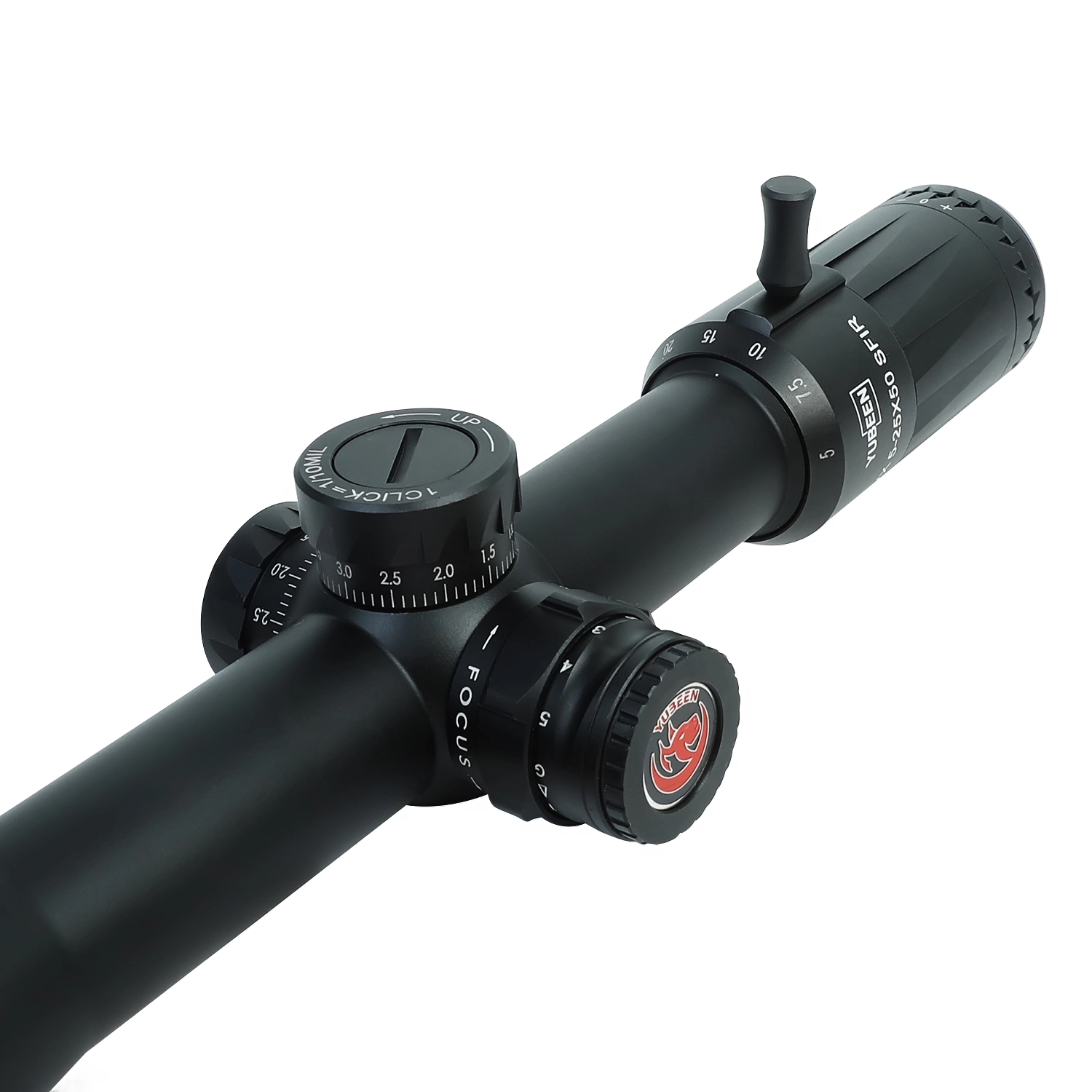
The VX5-25X50SFIR Rifle Optical Scope brings flexibility with its 5-25x zoom range, good for both near fights and far shots. Its lit reticle in red and green with five light levels improves sight in dim conditions. The big 50mm front lens pulls in lots of light when zoomed, while lenses coated many times on both sides boost sharpness to the max.
No matter if you shoot on a chilly hilltop or in damp flat woods, this scope’s water-resistant, mist-free, and bump-proof build keeps steady work going.
Mounting and Aligning the Scope Correctly
Mistakes in scope setup can ruin your zeroing tries. Start by making sure your mounting rings tighten to the maker’s listed torque levels. Put bubble levels to work in order to check that your reticle lines up straight across.
Bore sighting—done with a laser tool or by eye alignment—gets your first shots nearer to the mark and lowers the count of rounds you need to tweak later.
Make sure eye relief works right to avoid hits from the scope and keep a full view area even with the kick from firing.
Step-by-Step Process to Zero at 100 Yards
Initial Setup at the Range
Begin by getting ready on a firm base such as a bench rest or bags filled with sand to cut out mistakes from the shooter. Your target goes exactly 100 yards out—use a distance finder to double-check this length with care.
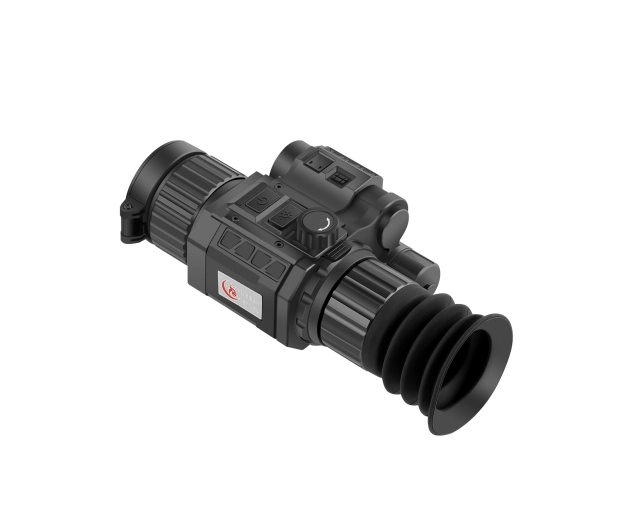
The ST35LRF Thermal Imaging Rifle Scope comes with a built-in laser distance finder that allows spot-on length checks, so you avoid wrong guesses on zeroing length from land shapes or view shifts.
First Shots and Initial Adjustments
Shoot a careful group of three rounds at the target’s middle. Look at the group’s average landing spot compared to where you aimed. If you pick an optic like the VX5-25X50SFIR, make changes with its exact turn knobs.
Click steps sit at 1/10 MIL amounts, which makes correct fixes simple. Tally the clicks and shift side and height settings as needed until your landing spot matches your aim spot.
Fine-Tuning for Precision Accuracy
Do three-shot groups again after every change. When groups keep hitting the target under the same weather setup, you reach a real 100-yard zero.
This method also checks that the turn knobs track right—key for uses that call for repeated height or side changes.
Environmental and Ballistic Considerations During Zeroing
Accounting for Wind, Temperature, and Humidity Effects
Even at 100 yards, outside conditions affect how the bullet flies. Wind might push light bullets away from path, and heat changes how fast the powder burns, which then shifts the speed from the barrel.
Pair path apps with your scope’s measurement marks or added software tools to make up for these changes. A thermal scope with path estimate tools can fine-tune your fixes right as things happen.
Built for long work in the field, the ST35L includes a few fresh ideas such as path estimate power.
Evaluating Ammunition Consistency and Barrel Behavior
To get results you can count on during zeroing times, pick top-quality ammo from one batch. Shots from a cool barrel might land different from those after it warms up because of barrel vibrations and dirt buildup.
Wipe your barrel clean before you begin and let it cool down between groups if steady hits matter most.
Leveraging Advanced Features in Yubeen Scopes During Zeroing
Utilizing Reticle Subtensions and Turret Feedback
Scopes with MIL or MOA aiming marks allow you to gauge shifts without wild guesses. If your first round drops 1 MIL below, you can shift exactly 10 clicks higher, assuming knobs at 0.1 MIL steps.
Clear sounds from turn knob clicks on types like the VX5-25X50SFIR help with exact fixes without needing to see. This touch sense proves extra handy for quick shifts under pressure or in poor light.
Enhancing Target Acquisition with Thermal Imaging
Thermal scopes bring perks when you check zero in weak light or hidden land where normal targets hide well.
The ST35L brings in a fresh picture boost method tech to improve picture sharpness and cut extra noise from the background, so you get clear views and a better time hunting.
When you test zero at early morning or evening, its heat view slices through mess in the surroundings—making sure your landing spot stays clear even in tough spots.
Post-Zeroing Maintenance and Verification Practices
Confirming Zero Stability Over Time and Use Conditions
After moving the gear or facing weather shifts like big heat changes, check your zero again by shooting a test group. Note down knob positions right after zero so you can snap back to your main setup if you tweak things out in the open.
This habit makes sure you never wonder where your rifle will strike after travel or climate changes.
Cleaning, Storage, and Protection of Optics Post-Zero
Guard your optic buy by wiping lenses with soft cloths made of fine fibers or special pens after every time out. Put on covers that flip up or soft sleeves to block dust and wet from getting in.
Keep optics in soft-lined boxes with moisture absorbers to stretch their life and hold sharp views between trips.
Yubeen Support Services and Contact Information
Expert Consultation on Product Selection and Usage
If you feel unsure about which scope fits your wants—regular optical or thermal—or need aid with setup steps, YUBEEN gives tech help through various ways. Their group leads you in using path tools well—even if you lack top shooting skills.
How to Reach Yubeen’s Customer Service Team
Help comes by phone (+86 13058999702), email, or via the question form on their site at YUBEEN. You can sign up products online to start warranty protection and reach fix choices if required.
FAQ
Q: How often should I re-zero my rifle scope?
A: Re-zero after any big bump, weather change like sharp heat moves, or if you change ammo kinds. Regular looks every few months keep accuracy strong.
Q: Can I use thermal scopes for daytime zeroing?
A: Yes. New thermal scopes give high-detail screens with smart methods that work well even in day light when heat differences show up.
Q: What’s the difference between ballistic calculation and ballistic fitting?
A: Ballistic calculation takes set details like bullet weight and start speed for ahead-of-time aim guesses. Ballistic fitting means noting real landing spots in true setups to improve path guesses as things change.
