


BUYERS GUIDE: CLIP-ON THERMALS
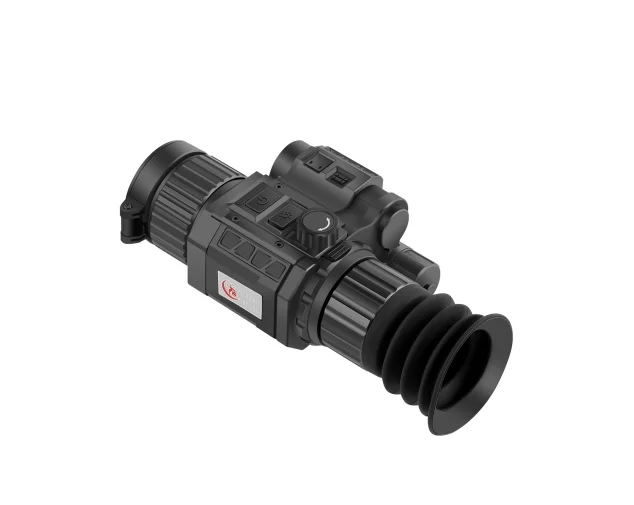
What Are Clip-On Thermal Scopes and How They Work
Thermal scopes have changed low-light and no-light tasks in hunting, tactical, and surveillance work. These tools spot heat patterns from objects instead of using visible light. This makes them very useful in situations where regular night vision devices do not work well.
A clip-on thermal scope is a simple add-on device that fits right in front of your current day scope. It turns that scope into a thermal imaging tool without changing the rifle’s zero. This setup is different from full thermal scopes, which take the place of your main optic completely. The flexible nature of clip-on units lets you keep the exact setup of your day optics while adding thermal features. For people who handle different types of jobs or settings, this kind of adaptability makes a clip-on thermal scope a strong choice.
Plus, since you can take them off easily, clip-ons let you switch between day and night use with the same gun setup. This removes the need to set aside a rifle just for dark conditions.
Key Features to Evaluate When Choosing a Clip-On Thermal Scope
When picking a clip-on thermal scope, base your choice on basic specs that affect how well it works in real use.
The sensor’s detail level matters a lot for clear pictures. A sensor with more pixels gives sharper images and helps spot targets better. For example, a 640×512 sensor with a sensitive NETD <18mK rating shows small differences in heat clearly. This is key in tough areas or bad weather. With a detailed 640×512 uncooled sensor and 12μm pixel pitch, this setup gives strong image quality at a 50Hz refresh rate.
How far it detects and the field of view (FOV) are just as important. Some systems spot things up to 2,600 meters away, which helps find dangers early. The FOV shows how wide an area you see at once. A broader FOV helps you stay aware of more around you, but it might reduce the zoom power.
The refresh rate affects how smooth the image looks as it updates. A rate of at least 50Hz works well for quick responses, especially when following moving items. Smart image tools like digital detail boost and hotspot following help pick out living targets from the background heat.
Finally, make sure it fits well with your day optics. A good clip-on keeps the optical path straight and avoids any shift in zero to hold accuracy. Many top models have several zeroing options to work with different setups and rifles.
Comparing Clip-On Thermals with Dedicated Thermal Scopes
Pros and Cons of Clip-On Systems Versus Standalone Devices
Deciding between a clip-on thermal scope and a full thermal unit comes down to what you need most for your work.
Clip-on systems give a big plus in flexibility. You keep your day scope’s aiming marks and bullet path adjustments while adding thermal sight. This helps a lot when you must adjust fast to different light levels without changing guns or resetting sights.
One drawback is that clip-ons can cause small optical line-up issues. Even a tiny mismatch might change where your shots land if not fixed right. Some units fix this with various zeroing saves and tough builds that handle recoil without moving. Extra tools include 8x digital zoom, five zeroing profiles, and Type-C power option from outside.
Full thermal scopes often blend thermal sight and aiming parts better, but they need their own zeroing steps. They may not suit quick switches back to day sights.
Integration with Daytime Optics: Practical Considerations
How well a clip-on system works relies on smooth pairing with your day scope.
Keeping the optical lines matched is the most important part. A solid clip-on should cause little change in up-down or side-to-side paths. This matters more with scopes that zoom a lot or use first focal plane aiming marks where exactness counts.
Some units have digital adds like picture-in-picture (PIP) to help with aiming without blocking the whole thermal picture. Better options such as Picture-in-Picture (PIP), Digital Detail Enhancement (DPC), and automatic hotspot tracking boost how well it works in the field.
Look for fit across zoom levels—some clip-ons do best at lower settings. If you use strong optics like 5x or higher, pick a clip-on that handles this without losing picture sharpness.
Yubeen’s Approach to High-Performance Thermal Imaging Solutions
For experts wanting solid design mixed with proven field results, Yubeen shows up as a reliable source for thermal imaging advances.
Yubing Optical Instrument Co., Ltd. is a high-tech enterprise dedicated to the research and development, production and sales of thermal imaging scopes and optical scopes. Based in Zhejiang, China, the firm has a group of experts in optics, electronics, and image handling who focus on expanding thermal detection limits. Their range of products mixes new AI methods with strong builds to give useful tools for police work and tactical needs. Whether you look for better bullet path math or steady performance in tough settings, Yubeen offers full systems that improve both aim and ease of use.
Thermal Imaging Rifle Scope – DT50LRF: Versatility Meets Long Range Precision
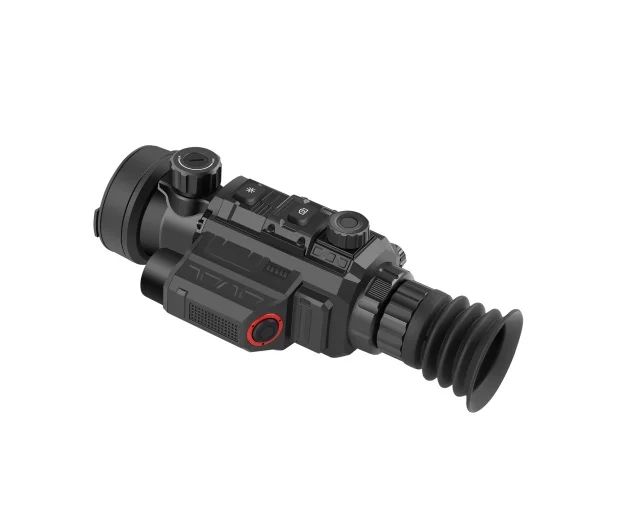
Core Specifications and Performance Highlights
The DT50LRF is built for users who want both far-shot accuracy and quick changes on the spot. It uses a 640×512 uncooled sensor with an extra-sensitive NETD <18mK level, giving clear views even in hard thermal spots. It pulls together all key infrared thermal imaging tech, has a resolution of 640X512, and comes with a NETD<18MK ultra-sensitive setup.
With a 50mm F1.0 lens that reaches up to 2,600 meters for detection and an 8.78° x 7.03° field of view, this scope finds a good mix between zoom reach and area awareness. The inner laser rangefinder (LRF) gives exact distance reads right away—a must for fixing bullet drop.
It stands out with four ballistic ways made for different speeds and angles: Remark Ballistic (Low/High), Ballistic Fitting, and Ballistic Calculation. With four ballistic modes, even new users can hit shots accurately.
Application Scenarios for DT50LRF Users
This tool shines in far-range hunting spots and tactical watch tasks where fast target spotting and shot exactness are key. Its recoil-start recording makes sure you catch important action moments, even with heavy shots.
Experts can use it in sandy areas, hill regions, or wooded spots with trust, as the smart AI ballistics adjust as needed without often resetting.
Thermal Imaging Rifle Scope – ST35LRF: Compact Powerhouse for Mid-to-Long Range Use
Technical Advantages of the ST35LRF Platform
If you want strong results without extra weight, the ST35LRF provides that in a small package with good imaging power. YUBEEN-ST35L can bring users a smarter operating system and a more suitable price, making hunting clearer and smarter.
Its 384×288 resolution sensor with NETD <35mK gives reliable thermal views over mid-to-far distances up to 1,800 meters. Even at just 507g, it has a built-in LRF for exact range info—vital for working out bullet paths.
The two-way ballistic setup (AI ballistics + calculation) makes bullet drop fixes automatic with good exactness on different slopes. AI ballistics + ballistic calculation for automatic bullet landing point display.
Operational Benefits in Field Conditions
In fast-changing places like thick woods or quick-action jobs, the ST35LRF does great with its quick refresh speed and easy controls. Its picture boost methods help see targets better under changing lights and heat levels.
Also, its IP67 tough rating keeps it working in temps from -30°C to +55°C—a must for users in very cold or hot places. The inner recording lets you save real-time notes through Wi-Fi link via the Yubeen mobile app.
Selecting the Right Clip-On Thermal Scope Based on Operational Needs
Matching Equipment to Mission Profiles or Hunting Requirements
Your pick depends on exact job details: land type, shot distance, target size, and outside temp all shape what tech fits best.
If your work involves far-watch tasks needing strong ballistic math in cold night settings, go for detailed systems with many ballistic ways and built-in LRFs—like the DT50LRF.
For on-the-move jobs or mid-shot tasks where quick moves count more than top range, smaller units like the ST35LRF give enough reach while staying easy to handle.
New users gain from tools with auto features like live angle fixes and simple ballistic starts that cut out trial and error in setup.
Budget vs. Performance Trade-offs in Professional Gear Selection
Top models might cost more at first, but they pay back through wide-use options, better dependability, and longer lasting build.
Adding things like five zeroing profiles, PIP boosts for clear aiming in ballistic math use, and AI-help for aiming mark setup can cut training time a lot and raise shot exactness for users with less skill.
Our unique ballistic notes do not require users to be very professional to enjoy a more pleasant hunting experience. Once set, it can accurately calculate the bullet drop point at any magnification.
Supporting Services from Yubeen: Beyond the Product Itself
Comprehensive Customer Support Infrastructure
Any high-level buy needs steady help after the sale. From advice before buying to check fit with your gear to help after like software updates or setup aid—this maker gives full care over time.
Yubeen support OEM and ODM, and also offer exclusive agency or national-level agency. If you check OEM paths or want big-area sales ties, help lines are ready to guide you each step.
How to Contact Yubeen for Purchase Inquiries or Technical Assistance
For questions on buying or tech help with adding products to your tools, reach out by email or call +86 13058999702. Local help is open through area sellers on their main site.
FAQ
Q: Can I use my clip-on thermal scope with any daytime optic?
A: Yes, but compatibility varies by model. Ensure your day scope supports front-mounted optics and that magnification levels fall within the thermal device’s effective range.
Q: Do I need to re-zero my rifle after attaching a clip-on?
A: No re-zeroing is typically required if the clip-on is aligned correctly and mounted securely in front of your day optic.
Q: Is there a significant image quality difference between 384×288 and 640×512 sensors?
A: Yes. A 640×512 sensor provides higher resolution imagery with better target recognition at longer ranges—critical for professional applications requiring precision shooting.
