


Best Thermal Scopes for Coyote Hunting: Maximizing Your Success Rate
 p
p
 p
pHunting coyotes calls for steady patience, quiet moves, and strong tools. Unlike chasing deer under the sun, going after these smart animals means working well after dark in their usual spots. To keep getting good results, your equipment has to close the space between what people can do and the coyote’s built-in skill for seeing at night. That is where thermal tools turn into your top helper, giving you a clear view even when everything else blends into the black.
The Night Shift – Why Thermal is the Ultimate Edge
Coyotes stand out for their sharp senses, as their power to detect smells, sounds, and motion in dim light turns them into a tough match for any experienced hunter. If you stick to regular scopes or basic night gear, you end up behind the curve, since night vision needs some outside light to work and can get tricked by dark spots or heavy bushes.
Thermal sighting picks up warmth patterns instead of brightness, so a coyote shows up bright white on a chilly winter scene and stands out right away. No matter if the creature hides under short grass or slips along thick woods, its body heat gives away its spot without delay. When you add a solid thermal riflescope to your kit, you cut out the wondering and pick up the skill to find these animals long before they sense your presence nearby.
If you want to boost your hunting advantage, Yubeen provides top-level thermal gear that mixes sharp pictures with tough use in real conditions. As someone who knows this area well, I have watched how their exact lenses change a long night of no luck into a winning trip by offering the clear sight hunters need to land each shot properly. Their products come with features like easy controls and long battery life, which make them perfect for both new and old hunters facing cold nights or rough ground.
Essential Features of a Top-Tier Coyote Hunting Thermal Scope
When you check out coyote hunting gear, you need to focus on three main points: how far it spots heat, how sharp the view is, and how well it holds up. These coyotes make small marks and usually stay at the field’s side to watch for risks, so if your scope only picks up warmth to 100 yards, you will scare it off before you even know what it is.
A good quality scope ought to reach way past the distance you shoot from with ease, which lets you watch how the animal acts, hold for the right side shot, and make sure no wrong targets linger close by. Sharpness matters just as much, as high detail turns a fuzzy warm spot at 300 yards into a clear coyote shape, not some pet dog or lost young cow. On top of that, the whole thing has to stand rough shakes from shots and icy cold without losing aim or eating power too fast. These traits together build a tool that fits the demands of real hunts in different places.
Precision at Distance: The Integrated Rangefinder Advantage
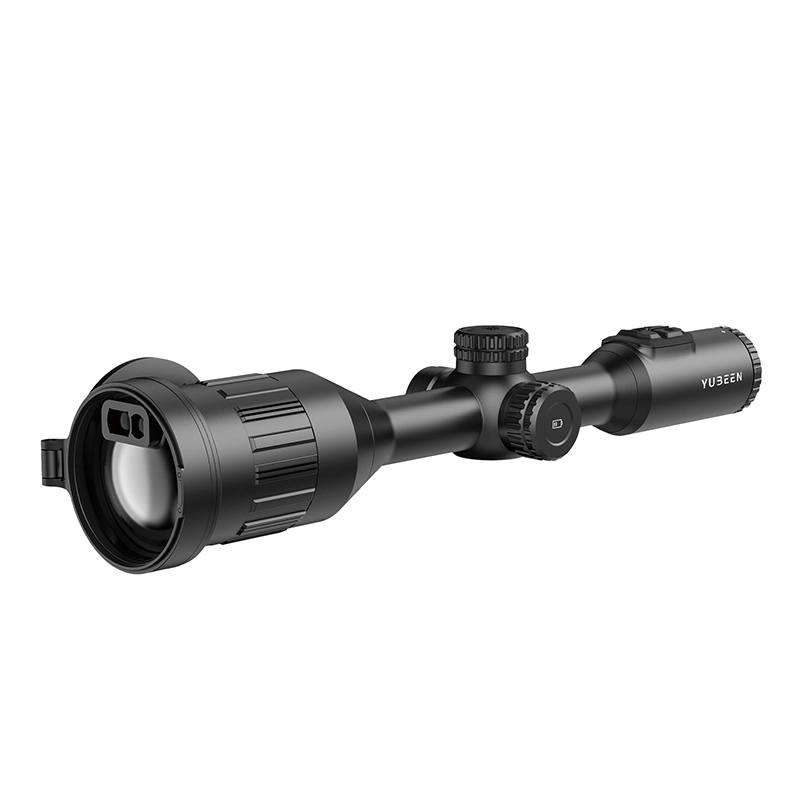
One key problem in dark hunts comes from judging how far things are, because in full black, a coyote at 150 yards seems a lot like one at 250 yards. If you guess that wrong, even a little, your shot path goes off, leading to a full miss or, even worse, a bad hit that hurts without killing quick.
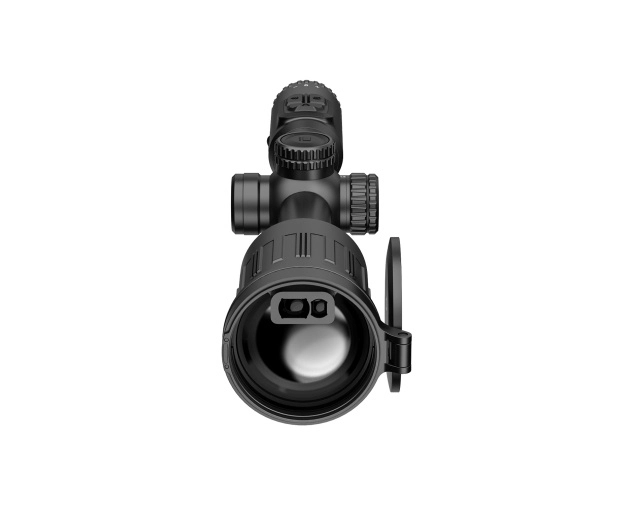
That is why the Built-in Electronic Rangefinder Thermal Imaging Scope shifts the whole game for today’s hunters of predators. Rather than lugging an extra hand tool for measuring and messing with more stuff in the night, this setup puts the laser right into your sight device.
With one quick button push, you get a fast and true yard count shown straight on the inside display, so you keep hold of the rifle, stay in place, and fix your target spot in moments. When you work in open fields or hilly land without trees to size things up, this inner exactness marks the line between winning and losing. It pulls the doubt from your aim and fills it with full trust, especially in spots where guessing leads to empty hands.
Rugged Performance and High-Resolution Sensors
For those who need a strong tool that tackles hard spots, the Y65L shines as a leading pick for best thermal for predator hunting. This version gets built just for folks who pass long hours in the chill, holding still for that short chance to shoot.
At its heart sits the sharp sensor that picks up fine details, because when you scan open land, you seek not just a warm glow but the twitch of a tail or outline of an ear. The strong picture handling in this riflescope gives the clean lines and good difference needed to follow small shifts across all kinds of ground cover.
What is more, toughness goes beyond basic ideas, as predator guns often fire fast rounds that shake hard. This scope gets made to take that ongoing bump while keeping its aim spot on. The way you work it stays simple too. You do not want to sort through hard lists when a coyote speeds in at twenty miles an hour. The buttons feel natural, so you switch views or color sets without thinking twice. Plus, with options for different mounts and easy updates, it adapts to various rifles and keeps working well over many seasons of use.
Tactical Tips: Maximizing Your Success Rate
Having the correct equipment starts things off, but the way you handle it shapes if your trip ends well. As you settle into a spot, begin with a broad look around. Set to lower power to widen what you see. This catches the first sign of an animal coming from the side. After you find a warm shape, then move closer to check it out for sure.
You ought to try various color options depending on the air that night. In damp weather, a dark warm view might match the land better, while bright warm works best for standing out on white ground. By getting good at these choices, you keep your sight fresh and make sure no target slips away unseen. These small adjustments build over time into habits that raise your chances each time out.
Beyond the Hardware: Global Support and Reliability
Buying a fine thermal scope means putting real money into what you love. You should get more than a package at your door. You should feel sure with full help from pros. Being dependable covers the water-proof parts and clear glass. It also means the advice and promise that keep you hunting year by year.
A focused team makes sure that if you ask about a software fix or need tips on fitting it to your gun, someone who knows steps in to guide you. This care for buyers turns your tool into a steady friend in the wild for a long stretch. With worldwide reach, Yubeen ensures quick fixes and parts no matter where you hunt, adding to the trust that comes with each purchase.
Conclusion
Hunting coyotes tests your know-how with almost no space for mistakes. By fitting out with a detailed thermal scope and built-in measure tool, you swing things your way. You learn to see past the dark cover, gauge range with exact care, and hit shots that seemed out of reach before. Do not let more nights pass with just wishes. Better your setup, sharpen your ways, and feel the clear view of the chase.
If you plan to move forward in your predator hunts or wonder which sight matches your gun best, we welcome you to get in touch. Our group works hard to give the items and facts you need to do well. Whether you hunt alone or with a team, these tools open up new spots and times to go after your goals.
Contact Us: For inquiries, technical specifications, or bulk orders, please visit our official website and use the contact form to speak with a specialist today. We cover everything from basic setups to custom fits, so your questions get answers that fit your style.
FAQ
Q: Can I use these thermal scopes during the daytime?
A: Yes. Unlike traditional night vision, which can be damaged by sunlight, thermal sensors are not affected by light. You can use them in total darkness, broad daylight, or through smoke and fog without any risk to the internal components. This makes them versatile for all kinds of weather and times, adding value to your investment.
Q: How long does the battery last on a typical night hunt?
A: Most professional thermal scopes are designed for extended use, typically offering several hours of continuous operation. Many also feature power-saving modes and the ability to connect to external power banks via USB for all-night sessions. With smart use, you stretch that time even further on long trips.
Q: Is it difficult to zero a thermal scope compared to a regular glass scope?
A: The process is very similar, but you must use a “thermal target.” This can be a simple hand warmer taped to a board or a piece of foil that reflects a different temperature than the background. Most modern scopes also feature a “one-shot zero” function that makes the process much faster than traditional methods. Practice a few times, and it becomes second nature for quick field adjustments.
