


Airgun vs. Rimfire: Is This 4-16×44 Optic Series Rated for Both?
I have spent many years studying optical glass and am thus quite picky when it comes to airgun scope quality. YUBEEN airgun scopes are of the class of high quality optics that look good and can handle the rough conditions of a spring-piston airgun. Whether you airgunner happens to shoot just on the weekends or is a pest control worker shooting all day long, you can’t go wrong with the extremely rugged, able optics that YUBEEN brings to the table at an affordable price – without the high prices of well known branded counterparts.
The Hidden Complexity of Selecting Multi-Platform Optics
Choosing a rifle scope can be a painstaking pursuit of robustness vs accuracy, especially if you have a dedicated air rifle for pest control around the house and a .22 LR rimfire for target practice at the range. Most premium riflescopes are optimised for centrefire calibers and will not survive the increased pressures employed by an air rifle, or indeed the heavy recoils found with .22LR. Using the wrong scope on your rifles could result in catastrophic failure by either the lenses moving out of alignment, or the breakage of the reticle.
Much discussion has taken place regarding whether a standard rifle scope is sufficient to cope with the unique movement inherent to airguns. Compared to the rearward kick of a rimfire, most air guns impart a far greater force in an opposite direction, which has been known to cause significant damage to some scopes. However, when carefully examined, the key to overcoming these issues lies not in the increased magnification but rather in understanding the internal construction of the scope in question.
Why Spring-Piston Rifles Destroy Ordinary Glass
When you shoot a spring-piston air rifle, it is not just the high-velocity air bullet that exits the barrel in a split second that worries most airgun shooters. In addition to that, the actual shooting process causes a heavy steel spring to release from its compressed state to rapidly propel the piston and air-line forward, which can cause a strong and somewhat ugly forward kick. Then as the piston reaches the end of the smooth bore cylinder, it transmits a secondary vibration or recoil in the opposite direction. This so-called “double recoil” is unique to airguns and can be devastating to scopes and other optical sights. Most regular scopes are mounted and zeroed on firearms that only experience recoil or rearward pull, and as such are not adequately secured or robust enough to handle the secondary “kick” of an airgun.
This series of scopes have stronger internal parts to combat the whipping that is generally inherent to airgun scopes. The locking rings are very strong and the main body is made with premium aircraft-grade aluminum. This makes for a solid internal structure. This series makes for a good choice of scope for those who use a spring-powered air rifle and also a rimfire bolt-action airgun.
Precision at Variable Ranges: The Rimfire Perspective
When shooting rimfire ammunition, the flat trajectory, along with aerodynamic shape, at closer distances is not as critical as how the bullet drops and is deflected by wind at longer distances. Generally, shots are called at distances of no more than 100 yards with a rimfire rifle, so unlike with a centerfire rifle, there is less forgiveness between you and your target at longer distances. In these scenarios, a high-quality, clear main object distance in the riflescope’s optical system and a smooth, easy-to-manipulate parallax adjustment knob become paramount to success.
A common problem with image quality in firearms optics is the failure to maintain a clear, in-focus image as the shooter moves from one distance to another. Most riflescopes don’t have a satisfactory focusing system, which can be a serious problem with any caliber, but with a rimfire it’s downright disastrous. With such fine adjustments needed to hit even tiny targets, rimfire shooters need all the help they can get—like a clear, in-focus image of that charging squirrel or fluttering clay disk.
Mastering Focal Depth and Parallax
For serious shooters who care about grouping at distances under a MOA, it’s important to have a basic understanding of parallax and how it affects their aim. Parallax error is present in any high magnification scope when the image of the target falls on a different plane than the reticle, and even slight movement of your head will cause the crosshairs to shift off of your target. Many high quality scopes feature parallax correction, which allows you to fine tune the inner lenses so that the image of your target falls exactly on the same plane as the reticle.
The 4-16x magnification range offers plenty of scope for broadfield viewing as well as a good close-up zoom for longer shots. Being able to exactly adjust the objective and oculars removes parallax error, meaning that with these scopes, you can always see exactly what your ammunition will hit, regardless of where you position your eye.
Introducing the Dual-Purpose Solution: The MC4 Series
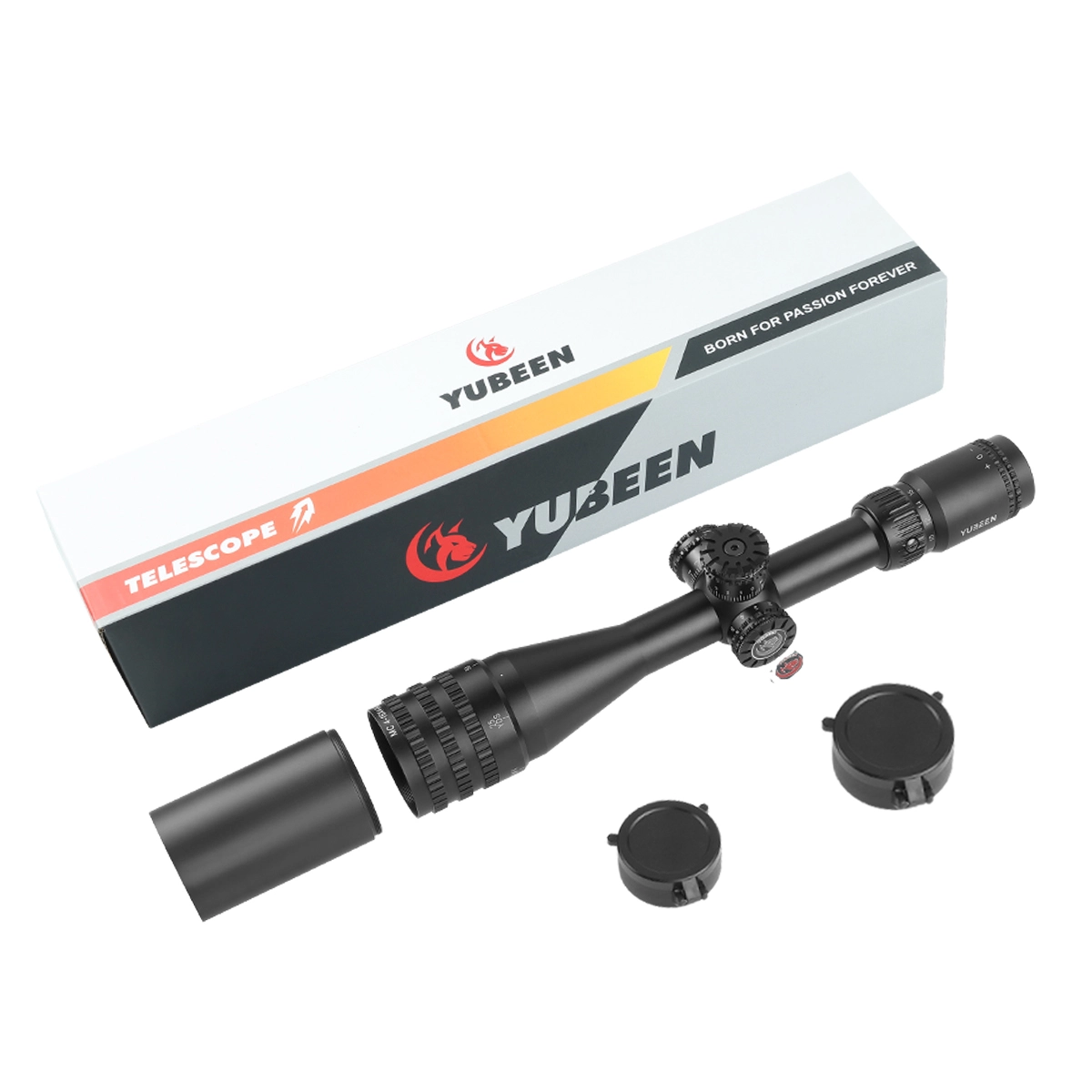
For one scope to address the demands of airgun marksmanship and rimfire prairie pistol perfs all at one time, there’s little that can top the MC4 series by Utica Industries. The use of a 44mm objective provides the perfect intersection of light gathering and physical size, keeping the scope from becoming too obtrusively large while allowing for superior performance out the front. The high-quality glass also features excellent coatings to help illuminate otherwise dim sight pictures, particularly during the dawn and dusk periods of many shooting competitions.
This collection offers two models – each suited to different shooting positions, positions of the rifle, and styles of hunters. Two strong models built from the same base, but offered up with different options for handling the various conditions you encounter while shooting.
The Optical Sight – MC4-16X44AOE for Low-Light Mastery
For the hunter who operates in dense woodland or is shooting at dawn and dusk, the AOE model will give you a big advantage. ‘AO’ stands for Adjustable Objective and the parallax adjustment is found on the front of the scope where the objective lens meets the tube. This is beloved by traditionalists as even the tiniest increments of focus can be achieved.
On top of that, the “E” means it has an electronic illuminated reticle. When you point at a dark shape against a shadowy backdrop—which happens a lot in pest control—the plain black crosshairs can get lost. By turning on the light, you get a shining guide that makes placing your shot simple. This model is a strong tool for airgun shooters who want both lasting strength and good visibility in a single unit.
The Optical Sight – MC4-16X44SF for Rapid Adjustments
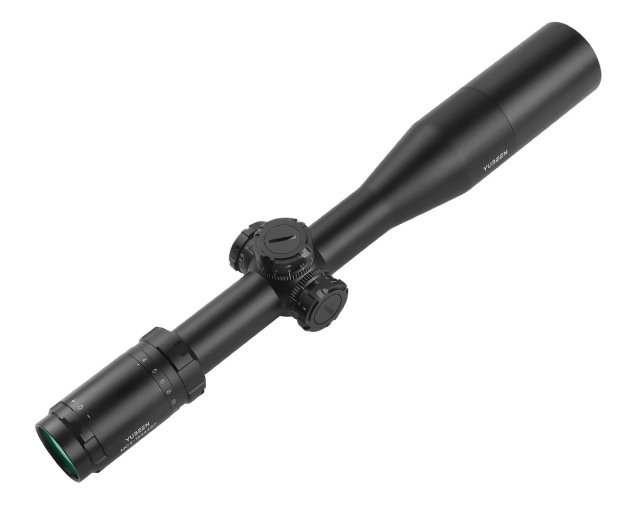
If you are a rapid fire shooter traversing across multiple targets at various distances, you may find the Side Focus (SF) model to be a better choice. Instead of having to reach all the way to the front of the Revenger to adjust the focus, the Side Focus model moves the focus adjustment knob to the side of the turret, allowing for focus adjustment without ever having to move your eye from your target or remove your eye from the Revolutionary’s eyepiece. With your eye against the Revolutionary’s ocular and your other hand grasping for the side focus knob on the Revenger, you can maintain a natural shooting position while precision adjusting the point at which your blurry unaligned vision turns sharply to a clear, locked-on, on-target image.
SF sights are popular with rimfire competitors and tactical shooters alike. The new and improved design gives the SF sight a smoother look and increased ergonomics. Like its cousin, the scope mount incorporates all the same zero-resetting features that won’t budge whether your gas ram air rifle is sloppy or your purpose-built rimfire target gun is precision-crafted.
Engineering Standards for Extreme Durability
Performance on target means little if the high-quality glass lets you down when it counts most – outside. To ensure high-quality refractors maintain superior optical performance from the shooting range to adverse outdoor conditions, the manufacturer has incorporated several key traits in the construction of each unit. The entire inside of the refractor’s tube is first nitrogen purged, flushing away any remaining water and air and replacing it with non-expanding dry nitrogen gas. As a result, high-quality lenses will not produce “sweating” or “fogging” within the refractor’s tube when stepping from a warm vehicle on a cold morning to venture out onto grounds.
Both the edges of the close-up lenses on the 1st model have multi-coated (MC) layers. This made the coating on the surfaces ever so slightly thinner, but it helps to let more light in and cuts down on light bouncing off the surface of the lens. You don’t notice the coating when looking through the lens, which provides a clear, natural image.
Precision Turrets and Repeatable Zero
A scope is worth only as much as its skill in going back to zero after you tweak it for wind or height changes. This series makes use of 1/4 MOA (Minute of Angle) clicks. Every click gives a clear feel and sound like a “snap,” so you can sense your changes even if you wear gloves.
The spring setups inside these turrets get put to thousands of shoots before they begin to looses precision. I tested shooting with a rimfire at 150 yards, and then go back to 50 yards. The reticle came right back to zero as it should with a professional product compared to a toy for fun.
Support and Professional Services
These high quality scopes will bring you top notch shooting results. Top quality scopes and other sight devices. World class service is our top priority. Whether you are a single shooter requiring assistance with “tech talk” or are a seller around the world seeking a reliable business partner to market your product we can provide competent assistance in selecting the correct sighting device for your specific style of rifle.
We can advise on optimal mounting height, proper torque for screw-in ring-mounts, or optimal reticle pattern based on your hunting terrain. Let us help you ensure a quality product is delivered to your door and provide you with the expert advice you need to get the most out of your investment out in the field, season after season.
We have an experienced team ready to answer questions about large quantities, provide complete technical details for specific products, or discuss custom optics solutions. Please contact them on the main website.
Contact Information:
Official Website:https://www.yubeen.com/
How can I get Service? Check our “Contact Us” page for our email and WhatsApp contact details.
Frequently Asked Questions (FAQ)
Q: Will the MC4-16X44SF scope work on my high-power break-barrel air rifle?
A: Yes. This series of riflescopes is designed with shockproof internal components to handle the bidirectional recoil found in high-powered spring-piston and gas-ram air rifles.
Q: Why a 44mm compared to a 50mm objective?
A: The 44mm provides an ideal amount of light entry for low light no IR use while allowing a lower eye piece collimation position which is better for cheek weld and accuracy. It is not as heavy or bulky as the 50mm.
Q: Does the illuminated reticle on the AOE model work in bright daylight?
A: The illumination is primarily designed to provide contrast in low-light conditions (dawn, dusk, or heavy tree cover). While visible in some daylight conditions, its greatest strength is preventing the reticle from “washing out” against dark or complex backgrounds.
